Choosing the perfect kitchen rug can feel like a small detail, but it actually has a huge impact on your kitchen’s style and comfort. Whether your kitchen is sleek and modern or cozy and farmhouse-inspired, the right rug can tie the whole room together.
Kitchen rugs not only add a splash of color and personality but also provide comfort underfoot during long cooking sessions and help keep your floors clean and dry. Plus, with so many styles, shapes, and materials to choose from, you can easily switch up your kitchen vibe from season to season without a major overhaul.
In this guide, we’ll explore 16 kitchen rug ideas that help you create a stylish, inviting space effortlessly.
From playful patterns to durable options and clever placements, these picks suit every kitchen size and design aesthetic. Let’s dive in and discover how a simple rug can upgrade your kitchen experience in 2026!
1. Layering Rugs for Added Texture and Warmth
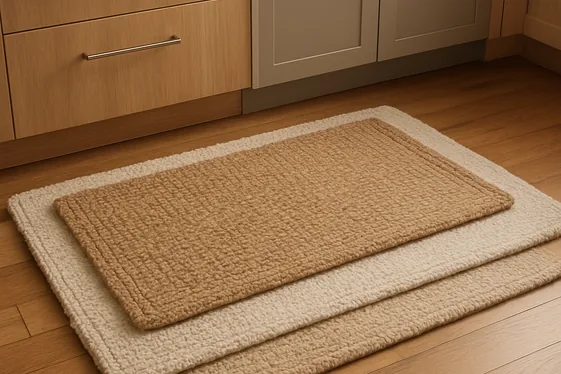
Start with a sturdy, flat-weave rug as your base—think jute or sisal in a neutral shade. These materials hold up well to kitchen traffic and offer a solid textural foundation. Next, layer a softer, smaller rug on top, like a plush wool or cotton mat with a bold pattern or color. Align the top rug slightly off-center to reveal the base’s texture without overwhelming the space.
This approach adds dimension and keeps your kitchen floor cozy underfoot, especially near prep stations or sinks. Keep in mind scale and durability when layering. Choose rugs that can be cleaned easily since kitchen messes happen. Avoid heavy, thick layers that could cause tripping or bunching. Instead, opt for lightweight pieces with nonslip pads to keep everything stable.
Layering rugs works best in kitchens with open floor plans where visual interest enhances the space without cluttering it. Quick Tip: Start with a 5×8-foot base rug and complement it with a 2×3-foot patterned piece to create a balanced look that invites warmth and style.
2. Choosing Durable Materials for High-Traffic Kitchens
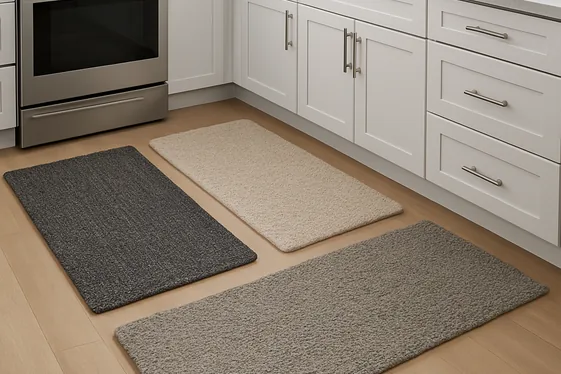
- Opt for rugs made from synthetic fibers like nylon or polypropylene; these materials resist stains and wear better than natural fibers, making cleanup easier after spills.
- Consider flatweave rugs because they don’t hold onto dirt and can withstand heavy foot traffic without flattening out.
- Look for rugs with low to medium pile height; high pile tends to trap crumbs and grease, leading to shorter rug life.
- Seek out rugs with a non-slip backing or add a rug pad; safety is key, especially on kitchen floors that can get slippery.
- Patterns and colors with multiple shades can help disguise stains and wear, extending the rug’s fresh appearance.
- Outdoor rugs made with weather-resistant materials also work well indoors in busy kitchens due to their durability and ease of cleaning.
- If a rug feels too flimsy or delicate in the store, it likely won’t endure the demands of a bustling kitchen environment.
Kitchens see a lot of action, so durability tops the list when choosing a rug. In my experience, rugs that balance toughness with comfort—like polypropylene flatweaves—handle everything from dropped utensils to daily foot traffic without showing wear quickly.
That’s why many experts recommend focusing on materials and construction designed for longevity, not just looks. This way, your stylish kitchen stays welcoming and practical day after day.
3. Playing with Bold Patterns to Energize Your Space
Quick Tip:
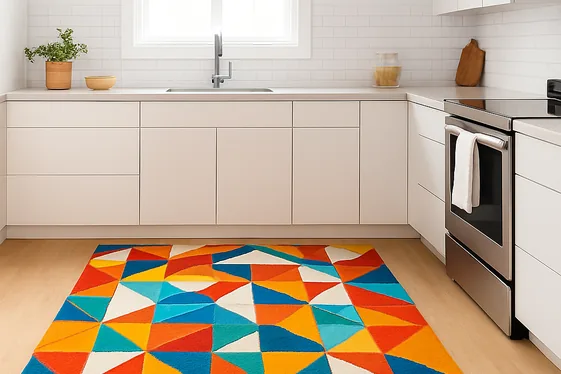
Select kitchen rugs with bold, eye-catching patterns to instantly energize your space. Look for geometric shapes, large florals, or graphic stripes in vibrant colors like teal, mustard, or coral. Place these rugs where you spend most of your time standing, such as in front of the sink or stove, to create a focal point. Make sure the pattern complements your kitchen’s existing palette and don’t be afraid to mix patterns carefully for extra flair!
Patterns act like personality in your kitchen. Choosing a rug with a striking design can shift the vibe from plain to playful in seconds. For instance, a rug with bold navy zigzags on a white background can contrast beautifully against light cabinets, adding just enough punch.
Keep the size around 2×5 feet for narrow spots and 4×6 for open areas to maintain balance. Bold patterns energize your kitchen, making you feel more inspired while cooking or entertaining.
4. Using Runner Rugs for Narrow Kitchens
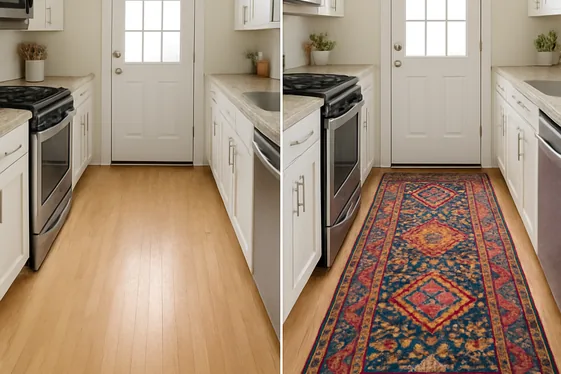
Before: Narrow kitchens often feel cramped and lack personality, with plain floors that don’t add any warmth or comfort underfoot. Walking back and forth while cooking can become tiresome on hard surfaces. The space feels more like a hallway than a cozy, inviting room.
After: A long runner rug stretches the length of the kitchen, instantly softening that tight corridor and adding a splash of color or pattern. It creates a defined path, making the kitchen feel pulled together and intentional. Plus, the cushioned surface eases fatigue from standing and cooking, turning that narrow zone into a comfy workspace.
Runners sized around 2 feet wide by 6 to 10 feet long fit snugly between counters or along a galley kitchen. Choose durable, easy-clean fibers like nylon or polypropylene to handle spills and heavy foot traffic. Layer with a non-slip rug pad underneath to keep it in place.
Narrow kitchens transform visually and functionally when runners guide the eye and cushion your step—small space magic that delivers style and practicality in one go.
5. Opting for Eco-Friendly and Sustainable Rugs
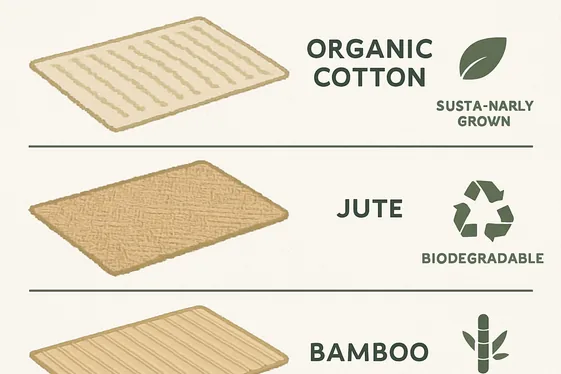
- Look for rugs made from natural fibers like jute, sisal, or organic cotton. These materials are biodegradable and reduce environmental harm when discarded.
- Choose rugs produced with eco-friendly dyes and manufacturing processes. Avoid chemical-heavy or synthetic treatments that pollute waterways.
- Prioritize brands that share transparent sustainability practices. Research certifications such as GOTS or OEKO-TEX to verify claims.
- Consider buying local or handmade rugs to support smaller businesses and reduce carbon footprints linked to shipping.
- Go for durable rugs that can handle kitchen traffic and last years without frequent replacement. Longevity means less waste over time.
I’ve noticed many homeowners overlook the impact of their rug choices on the planet. Opting for eco-friendly and sustainable rugs not only safeguards the environment but also introduces unique textures and character to your kitchen. Plus, these rugs often feel better underfoot and maintain their charm longer, making your stylish space kind to both guests and the earth.
6. Mixing Different Rug Shapes for Visual Interest
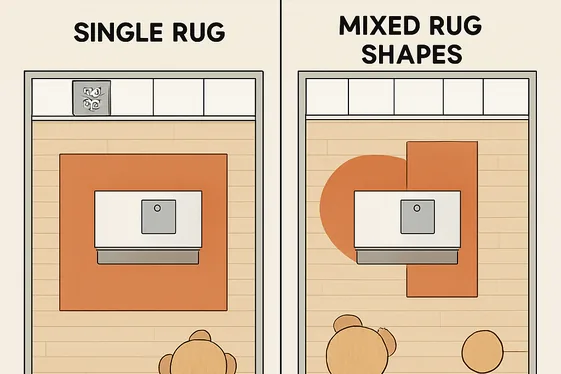
| Point | Same Shape Rugs | Mixing Different Shapes |
|---|---|---|
| Visual Appeal | Uniform and predictable look | Adds unexpected charm and depth |
| Space Definition | Clear boundaries but can feel flat | Defines zones creatively in open areas |
| Layering Ease | Simple to layer without clashes | Requires thoughtful balance |
| Design Flexibility | Limited to similar patterns and styles | Mixes textures and sizes effectively |
| Flow and Movement | Straightforward pathways | Guides eye movement with curves |
| Rug Size Versatility | Sizes match uniformly | Balances large and small for impact |
| Room Personality | Neutral, streamlined vibe | Brings bold character and fun |
Mixing different rug shapes is a smart way to break monotony and inject personality into your kitchen floor. Place a round rug near the dining nook and a rectangular runner by the prep area to visually separate these spots without walls. This combo also helps guide movement naturally across the space.
The trick is balancing scale and pattern so they compliment instead of clash. When done intentionally, layered shapes create an inviting rhythm that keeps your kitchen feeling lively and stylish—no boxy feel allowed!
7. Picking Rugs with Non-Slip Backings for Safety
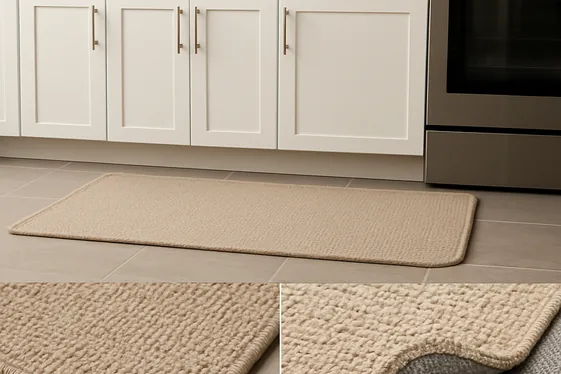
Do:
- Choose rugs with rubber or latex backings to keep them firmly in place on smooth kitchen floors.
- Measure the rug to ensure it fits your workspace without blocking cabinet doors or drawers.
- Opt for medium-sized rugs, around 2×3 feet or 3×5 feet, for better stability and coverage.
- Clean both the floor and the rug backing regularly to maintain grip and prevent slips.
- Secure larger rugs with non-slip pads underneath for extra safety on tile or hardwood.
Don’t:
- Don’t place rugs with smooth fabric backs directly on slick surfaces—they can slide dangerously.
- Avoid rugs without any anti-slip features in high-traffic kitchen areas.
- Don’t use double-sided tape alone as a long-term fix; it can damage flooring or lose stickiness.
- Steer clear of mats too small for your kitchen’s busiest spots—they won’t stay put.
- Don’t ignore worn-out rug backings, which can quickly lose traction and cause falls.
Non-slip backing is a safety game-changer in the kitchen, where spills and quick movements are common. Rugs that stay put prevent trips and falls, especially on tile or hardwood floors. Pairing the right material with good-sized, well-placed rugs means you can enjoy style without sacrificing peace of mind.
Keep an eye on your rug’s grip over time to maintain a secure cooking and walking space.
8. Selecting Stain-Resistant Rugs for Busy Families

Cost: Moderate
Maintenance: Easy
Material: Synthetic fibers (like polypropylene)
Best For: Families with kids and pets
Stain-resistant rugs are a smart pick for kitchens that see a lot of action. Look for materials like polypropylene or nylon, which repel spills and dry quickly—ideal when you’ve got little ones or pets around. In my experience, rugs with tighter weaves hold up better against wear and tear, making them last longer in busy households.
Aim for sizes that cover high-traffic zones near the sink or stove but still fit comfortably without creating tripping hazards. The payoff? You keep your kitchen stylish and spot-free without constant scrubbing.
9. Incorporating Vintage Rugs for Unique Charm
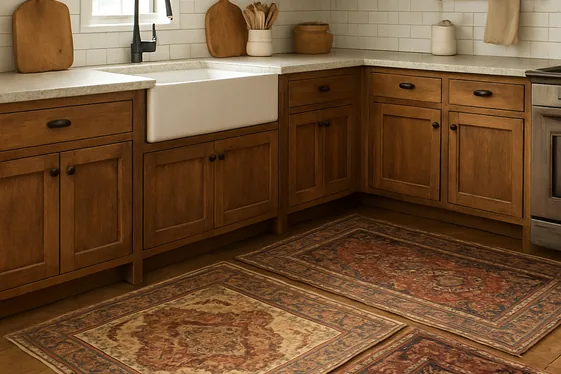
Vintage rugs bring a layer of character and history to kitchen spaces, transforming a simple area into one filled with warmth and personality. Look for pieces that showcase distinctive patterns or faded colors, typically in sizes between 2×3 and 3×5 feet—ideal for fitting under a sink or along a narrow walkway. Their worn look hides stains and spills better than new rugs, making them both practical and stylish.
Pair a Persian or kilim rug with minimalist kitchen designs to introduce a subtle pop of texture without overwhelming the space. To maintain a vintage rug’s charm, place a non-slip pad underneath to keep it secure and add cushioning underfoot during long hours of cooking. These rugs do best in low-traffic zones or spots where they won’t be exposed to water often, as delicate fabrics may wear faster otherwise.
For a unique style twist, layer a vintage rug over a neutral flat-weave rug, creating depth and interest. Vintage rugs shine when you want a kitchen that tells a story without sacrificing comfort or ease of care.
10. Coordinating Rug Colors with Kitchen Accents
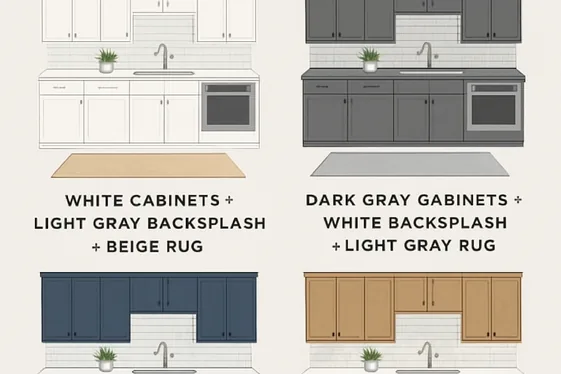
- Pick rug colors that echo your kitchen’s existing accent hues like cabinet knobs, utensil handles, or light fixtures. This creates a sense of unity without overwhelming the space.
- Use subtle contrasts by selecting rugs with hints of a secondary accent color, offering visual depth while staying cohesive. For example, if your accents are brass, choose a rug with warm golden flecks.
- Incorporate the same color tones found in smaller kitchen accessories—dish towels, countertop jars, or chair cushions—to tie the room’s elements together.
- Match rug patterns with the shape or style of your utensils or décor, such as floral patterns complementing vintage kitchenware or geometric shapes syncing with modern handles.
- Consider the finish of metal accents: matte brass, shiny chrome, or black iron can all influence your rug color choice, making coordination feel intentional.
- For those with bold kitchen accents, select rugs in muted shades of the accent color to avoid visual overload while maintaining style harmony.
- Coordinate textures; a plush rug works well with smooth stainless steel accents, whereas a flatweave suits rustic wooden knobs or matte surfaces for balance.
Aligning your kitchen rug color with accent pieces helps create a streamlined look that feels well-thought-out. It makes your kitchen appear polished without extra effort, subtly connecting all components—from metallic handles to fabric details—through color and texture.
11. Placing Rugs Strategically for Functional Zones
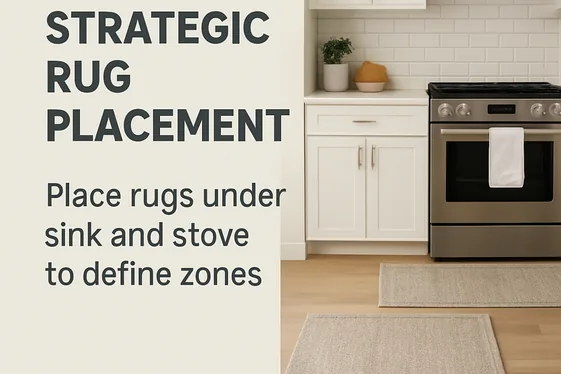
Quick Tip:
Position rugs where they serve clear purposes—such as in front of the sink, stove, or prep areas. Choose runner rugs along narrow walkways to define paths without crowding. Use smaller mats near workstations to provide comfort and protect floors. Make sure rugs don’t overlap or crowd each other, maintaining clear zones for cooking, cleaning, and dining.
Placing rugs strategically helps create distinct functional zones in an open kitchen, guiding movement and workflow naturally. I’ve noticed that placing a cushioned rug in front of the sink and stove reduces fatigue during tasks, while a runner along the main aisle keeps feet cozy without cluttering space.
Separating zones with rugs not only organizes the kitchen visually but also helps homeowners move more efficiently, saving time and avoiding slips on busy days.
12. Integrating Washable Rugs for Easy Maintenance
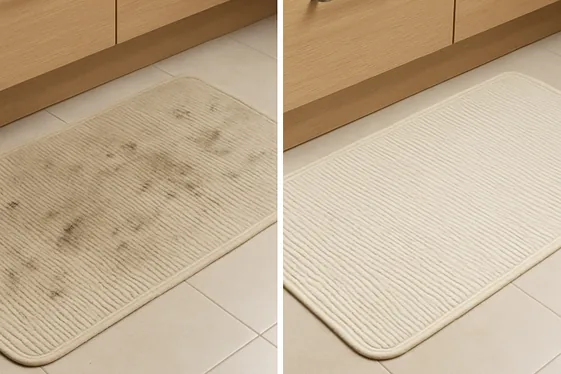
Before: Kitchen rugs often become a magnet for spills, crumbs, and stains, making them a constant headache to clean. Traditional rugs can trap odors and dirt, leaving homeowners reluctant to add one where foot traffic is high. The hassle of professional cleaning or delicate handling often outweighs the desire for a cozy floor covering.
After: Switching to washable rugs transforms kitchen upkeep entirely. These rugs can be tossed into the washing machine after a spill or regular use, keeping the space fresh without extra effort. Stains no longer cause panic, and clean, vibrant rugs bring ongoing warmth and style to the heart of the home.
Washable rugs blend practicality with style, especially in busier kitchens. Look for durable, machine-friendly fabrics like cotton or microfiber in sizes that fit between counter stools or under the sink. Deep textural patterns or playful prints can hide minor stains between washes. With easy maintenance, these rugs stay inviting without sacrificing hygiene, letting you enjoy comfort plus convenience every day.
13. Using Rugs to Define Open Concept Kitchens
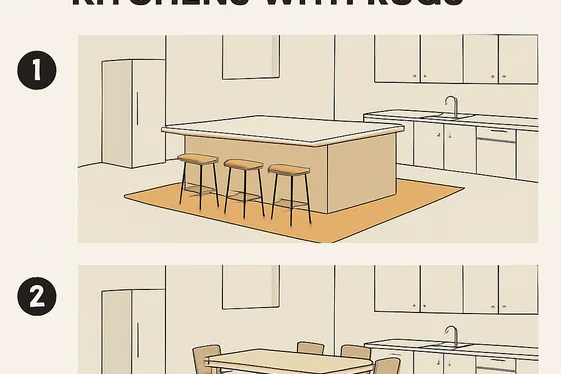
- Measure the area where you want to place the rug, focusing on the boundary between the kitchen and adjoining space. Choose a rug size that clearly marks this transition without overwhelming your open floor plan.
- Opt for a rug material that handles spills well, such as indoor-outdoor or washable flatweaves. This ensures the rug stays functional and easy to maintain amid kitchen traffic.
- Position the rug so it anchors the kitchen workspace or dining nook but does not obstruct movement. Aim to have the rug extend just beyond counters or island bases for a defined zone.
- Pick patterns or colors that complement your kitchen cabinetry and flooring. Durable low-pile rugs with subtle prints can offer visual structure without competing with design elements.
- Secure the rug with a non-slip pad or rug gripper that prevents shifting on hardwood or tile. Safety is key where cooking meets foot traffic.
Defining zones in an open-concept kitchen can be tricky without walls. By layering a rug carefully, you establish separate cooking and eating areas naturally. It grounds the space while giving your kitchen personality, guiding guests and family to move comfortably between zones. Just remember to balance style with practical upkeep to keep your kitchen looking fresh and inviting.
14. Combining Modern and Traditional Rug Styles
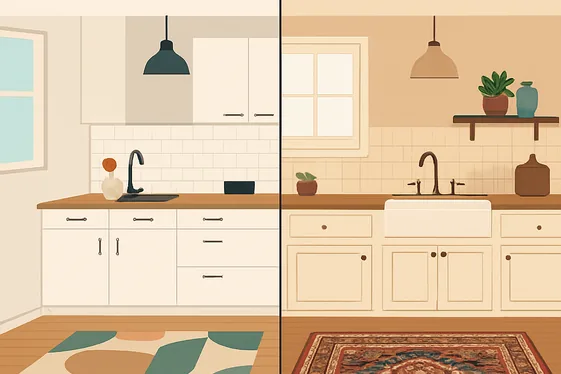
| Point | Traditional Rug Style | Modern Rug Style |
|---|---|---|
| Pattern | Floral, Oriental, intricate details | Geometric, abstract, clean lines |
| Color Palette | Rich, warm hues like deep reds and golds | Neutral tones or bold, vibrant pops |
| Material | Wool or natural fibers | Synthetic blends or flatweave cotton |
| Durability | Thick pile, holds up to heavy foot traffic | Low pile, easy to clean and maintain |
| Placement | Centered under a kitchen table or island | Runner rugs along workspaces or sinks |
| Style Impact | Adds warmth and history | Brings freshness and simplicity |
| Mix-and-Match Ease | Can clash if too ornate | Layer well with textured traditional pieces |
Old and new don’t have to compete — they can complement. Blending a traditional rug’s rich patterns with the clean design of a modern rug adds visual interest and comfort in your kitchen. I’ve noticed that pairing a timeless Persian-style rug under the dining set, with a sleek modern runner near the sink, balances nostalgia and practicality beautifully.
It also helps visually divide areas in an open kitchen layout, making your space feel inviting yet dynamic. Mixing old and new creates character without chaos.
15. Sizing Rugs Perfectly for Your Kitchen Layout
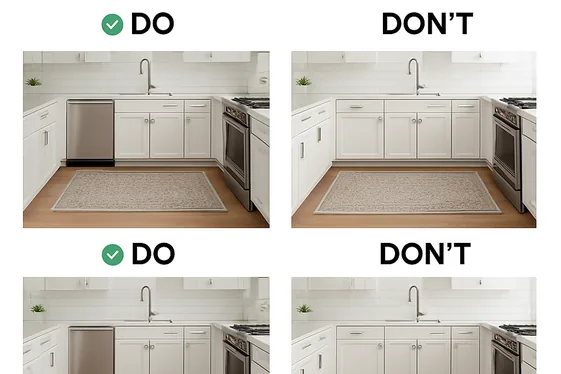
Do:
- Measure the kitchen floor space before selecting a rug to ensure proper sizing.
- Opt for a rug that allows at least 18 inches of bare floor around the edges for balance.
- Place runners in narrow walkways to maintain functionality without crowding.
- Choose a rug at least as wide as the sink or stove area to catch spills and crumbs effectively.
- Make sure the rug’s length doesn’t block cabinet doors or drawers from opening fully.
Don’t:
- Don’t pick a rug that extends beyond your kitchen’s main traffic area, as it creates a tripping hazard.
- Avoid rugs that are too small; they tend to look out of place and offer little comfort.
- Don’t cram a large rug into a tiny kitchen—it overwhelms the room and restricts movement.
- Skip rugs with slippery backings or that don’t stay put on tile or hardwood floors.
- Don’t forget to consider appliances; rugs can get caught under fridge or dishwasher doors if too long.
Choosing the right rug size for your kitchen keeps things safe and stylish. A rug that fits well defines zones without crowding or causing accidents. Accurate measuring and assessing doors or drawer clearances prevent future headaches. Remember, a perfectly sized kitchen rug enhances flow and comfort, turning your room into a seamless space where cooking and conversations happen effortlessly.
16. Choosing Rugs that Complement Kitchen Flooring
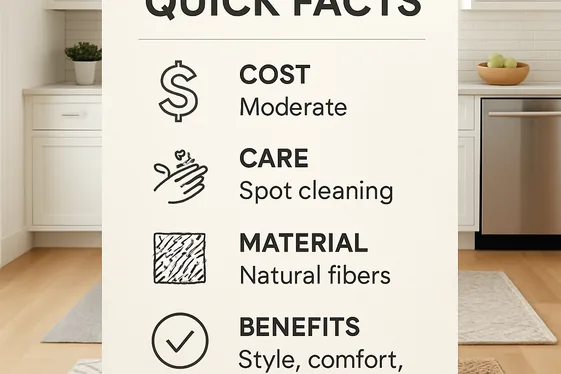
Cost: Moderate
Skill Level: Beginner
Best For: All kitchen flooring types
Result: Harmonious design flow
When picking a rug for your kitchen floor, start by considering the material and color of your tiles or hardwood. A rug with complementary tones or subtle patterns can soften hard flooring and prevent slipping. For example, a neutral jute rug pairs well with dark wood, while vibrant patterns enliven plain ceramic tiles.
Size matters too — aim for a rug that fits comfortably in front of the sink or stove without crowding the space. This balance keeps your kitchen looking polished and feeling cozy.
Conclusion
Kitchen rugs are more than just decorative accents; they add warmth, comfort, and personality to one of the busiest rooms in your home. From layering textures to choosing stain-resistant weaves, this guide explores practical and stylish options fit for every kitchen style. Remember to think about your kitchen’s traffic, layout, and existing colors when selecting a rug.
Whether you prefer vintage charm, bold patterns, or eco-friendly fibers, there’s a perfect rug waiting to elevate your space. Don’t forget safety and maintenance as key factors too. With so many ideas at hand, you’re well-equipped to pick a rug that effortlessly blends beauty and function—making your kitchen cozy and stylish in 2026 and beyond.

Sarah Parker is a creative content writer with experience in crafting engaging, reader-friendly, and SEO-optimized content. She specializes in writing blog posts, website copy, social media captions, and digital marketing content across niches including lifestyle, home decor, business, and technology. Her writing style focuses on clarity, audience engagement, and search engine visibility.