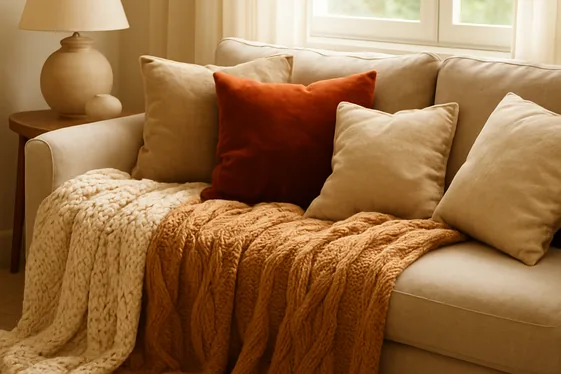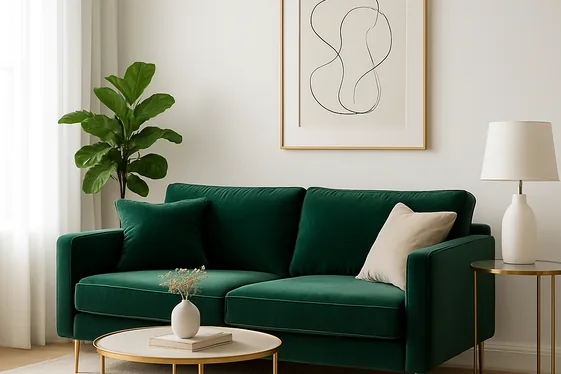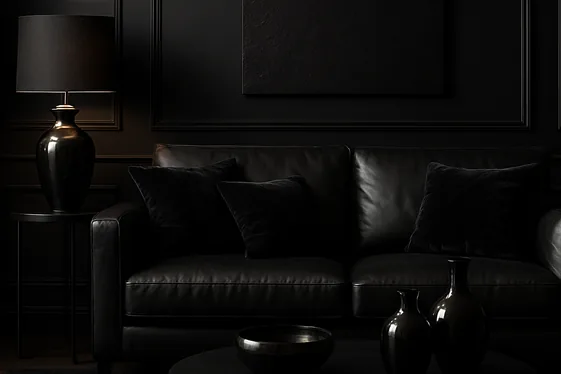
Creating a calm and inviting living room doesn’t mean you have to sacrifice style or comfort. Minimalism, with its clean lines and uncluttered spaces, offers the perfect foundation for a serene environment where you can relax, recharge, and entertain with ease.
If you’re ready to give your living room a peaceful facelift, this guide is packed with 15 thoughtful minimal living room ideas tailored for homeowners across the USA. Whether you live in a cozy city apartment or a spacious suburban home, these tips will help you cultivate a calming space that reflects your taste and modern lifestyle.
From clever furniture choices to soothing color palettes and smart storage solutions, each idea is designed to reduce stress and elevate your everyday experience.
Let’s dive into creating a minimal living room that feels like a breath of fresh air every time you walk in.
1. Choose Soft, Neutral Color Palettes to Set a Peaceful Mood
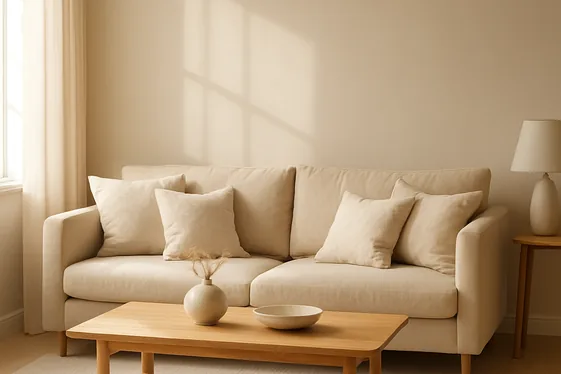
Soft, neutral colors like warm beiges, gentle grays, and muted whites create an immediate sense of calm in any living room. These shades act as a subtle backdrop, allowing natural light to play and colors of natural elements to stand out. Opting for these hues gives you flexibility in adding personal touches without overwhelming the senses.
Light, gentle tones can visually enlarge a space and reduce visual clutter, which is essential for a minimal setting. They promote relaxation and give the room an airy, open feel. Pair these colors with clean furniture designs and natural materials for a harmonious result. I’ve noticed that a well-chosen neutral palette sets the stage for calm energy throughout the day and into the evening.
You can always introduce small pops of color through textiles or plants without disturbing the overall minimalist vibe. This approach is effective in American homes where open and bright spaces are often highly valued for family life and entertaining. This keeps the idea practical, clear, and easy for readers to use right away.
It also adds a little more helpful detail without making the writing sound stiff. A simple, thoughtful explanation like this helps the whole article feel complete. That balance makes the advice feel more natural, more useful, and easier to follow.
2. Incorporate Natural Elements for a Balanced Atmosphere
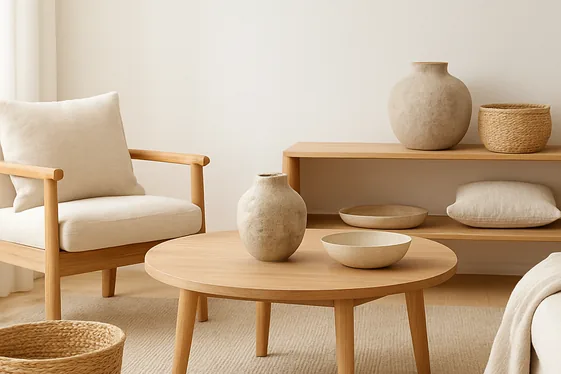
- Use wood furniture to add warmth and texture, choosing finishes in light or natural tones to keep things airy.
- Integrate stone or ceramic decorative items, like bowls or vases, to bring an organic feel.
- Consider woven baskets or rugs made from natural fibers like jute or sisal for subtle texture.
- Place natural textiles such as linen or cotton cushions and throws, which enhance comfort and connection to the outdoors.
- Add a water feature like a small tabletop fountain for soothing sounds that calm the mind.
Natural elements make a minimal space feel alive and comforting rather than cold or sterile. In my experience, incorporating these pieces enhances the overall energy of the room, grounding it and making it inviting to walk into after a hectic day.
This combination also encourages mindfulness and a slow pace, essential for calm living rooms. Balancing clean modern lines with organic touches keeps your room stylish yet approachable. This keeps the idea practical, clear, and easy for readers to use right away.
It also adds a little more helpful detail without making the writing sound stiff. A simple, thoughtful explanation like this helps the whole article feel complete. That balance makes the advice feel more natural, more useful, and easier to follow.
3. Create a Central Focus with Simple Statement Furniture
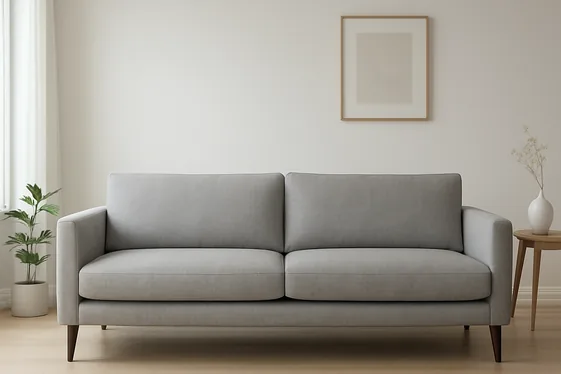
Quick Tip:
Select one standout furniture piece, such as a low-profile sofa or sleek coffee table, to anchor your living room. Keep it simple in design and neutral in color to maintain the minimalist feel but bold enough to draw the eye.
Using a single statement piece immediately draws attention and gives the room a sense of purpose without overwhelming it. I recommend steering clear of complex patterns or oversized elements that can clutter the visual field. Instead, think about quality and comfort—a well-crafted armchair in soft leather or a wooden coffee table with subtle curves works wonders.
This focal point invites you to relax and centers the space, creating an atmosphere that feels both intentional and restful. This keeps the idea practical, clear, and easy for readers to use right away.
It also adds a little more helpful detail without making the writing sound stiff. A simple, thoughtful explanation like this helps the whole article feel complete. That balance makes the advice feel more natural, more useful, and easier to follow.
4. Declutter with Smart Storage Solutions
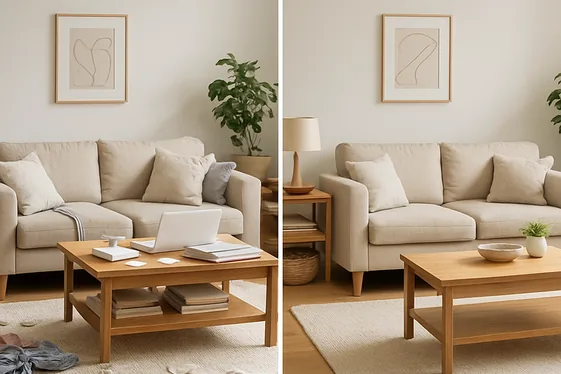
Before: Many living rooms suffer from clutter due to a lack of well-planned storage, making the space look chaotic and stressful.
After: Introducing smart storage keeps belongings organized and easily accessible, allowing surfaces to remain clear and your space to feel open and calm.
Closet furniture or built-in shelves help hide everyday items without sacrificing style. Incorporate multifunctional pieces like ottomans with storage or minimalist media consoles with hidden compartments. The aim is to streamline what you keep out in the open while still maintaining accessibility, which keeps your living room feeling tidy and inviting. Minimalism thrives on clear spaces, and that clarity starts with practical storage.
This keeps the idea practical, clear, and easy for readers to use right away. It also adds a little more helpful detail without making the writing sound stiff. A simple, thoughtful explanation like this helps the whole article feel complete. That balance makes the advice feel more natural, more useful, and easier to follow.
5. Prioritize Comfortable Seating with Clean Lines
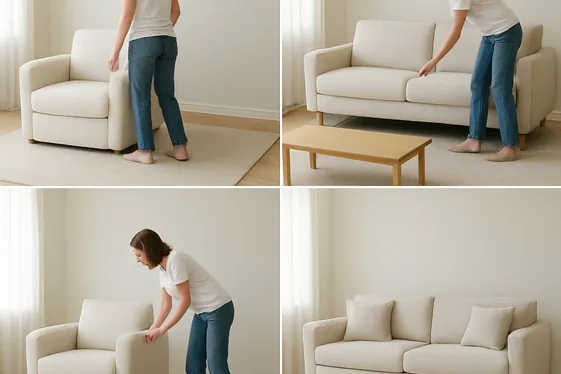
- Choose streamlined sofas or chairs with simple silhouettes, avoiding extra frills or heavy ornamentation.
- Look for plush cushioning that supports long-lasting comfort, especially if you relax often with family or friends.
- Select upholstery in breathable fabrics such as linen or cotton to enhance comfort and fit the calm aesthetic.
- Arrange seats to encourage easy interaction, ideally in a U-shape or gentle curve, to foster connection.
- Add minimal, neutral-toned throw pillows for subtle softness without clutter.
Comfort is the foundation of a calm living room. I’ve seen this work well in many cases where homeowners swap bulky, overstuffed furniture for sleek, clean-lined pieces and don’t sacrifice coziness. Seating that looks simple but feels cozy sets the tone for relaxation while keeping your minimal design intact. Good seating makes your space inviting for everyday living and special gatherings alike.
This keeps the idea practical, clear, and easy for readers to use right away. It also adds a little more helpful detail without making the writing sound stiff. A simple, thoughtful explanation like this helps the whole article feel complete. That balance makes the advice feel more natural, more useful, and easier to follow.
6. Mix Textures to Add Depth Without Overwhelming
| Comparison Point | Single Texture | Mixed Textures |
|---|---|---|
| Visual Interest | Low | High |
| Calmness | Neutral | Enhanced |
| Ease of Maintenance | Easier | Slightly More Complex |
| Comfort Feel | Basic | Layered Comfort |
| Style Flexibility | Limited | Versatile |
| Sense of Warmth | Moderate | Greater |
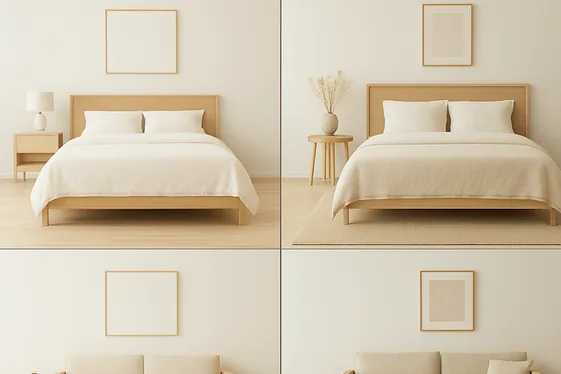
That’s why many experts recommend mixing textures subtly—wood, soft textiles, ceramic, and metal accents create layers that feel enriching but not chaotic. It makes your minimal living room visually engaging, adding softness and warmth without extra clutter. This technique is especially useful in smaller rooms where you want to avoid flat or cold vibes but still maintain calm energy.
This keeps the idea practical, clear, and easy for readers to use right away. It also adds a little more helpful detail without making the writing sound stiff. A simple, thoughtful explanation like this helps the whole article feel complete. That balance makes the advice feel more natural, more useful, and easier to follow.
7. Utilize Natural Light to Enhance Tranquility
Do:
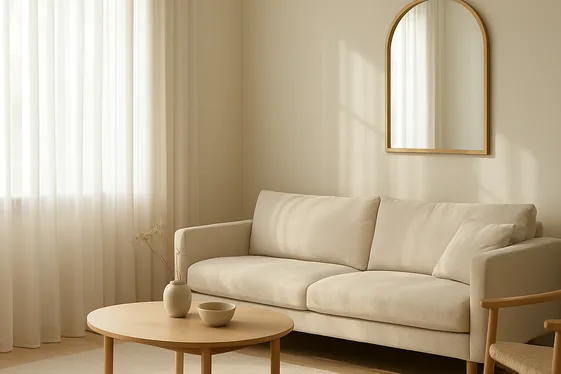
- Keep window treatments light and sheer to maximize sunlight.
- Position mirrors to reflect natural light deeper into the room.
- Arrange seating near windows to enjoy daylight.
- Use light-colored floors and walls to amplify brightness.
- Regularly clean windows for unobstructed light.
Don’t:
- Use heavy drapes that block sunlight completely.
- Place bulky furniture in front of windows.
- Rely only on artificial lighting during the day.
- Choose dark paint colors that absorb light.
- Overcrowd windowsills with decor.
Natural light improves mood and makes spaces feel more expansive and peaceful. Avoiding heavy, dark window treatments keeps your living room connected to the outdoors, which promotes calm and energy flow. These small tweaks ensure the space stays breathable and welcoming every day. This keeps the idea practical, clear, and easy for readers to use right away.
It also adds a little more helpful detail without making the writing sound stiff. A simple, thoughtful explanation like this helps the whole article feel complete. That balance makes the advice feel more natural, more useful, and easier to follow.
8. Incorporate Greenery for Life and Freshness
Cost: Low to Moderate
Time: Low Maintenance
Skill Level: Beginner to Intermediate
Best For: Adding vibrancy and improving air quality
Result: Enhanced relaxation and visual interest
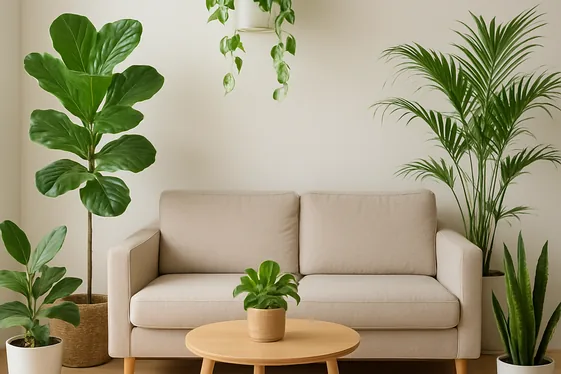
Green plants bring a vital sense of life to any space. Whether it’s a tall fiddle leaf fig, a grouping of succulents, or hanging trailing vines, greenery improves mental well-being and sharpens focus. I find that plants also naturally soften sharp edges and offer a gentle pop of color in neutral palettes.
This simple addition creates a tranquil environment rooted in nature, perfect for winding down in your living room. This keeps the idea practical, clear, and easy for readers to use right away.
It also adds a little more helpful detail without making the writing sound stiff. A simple, thoughtful explanation like this helps the whole article feel complete. That balance makes the advice feel more natural, more useful, and easier to follow.
9. Opt for Multipurpose Furniture to Maximize Space
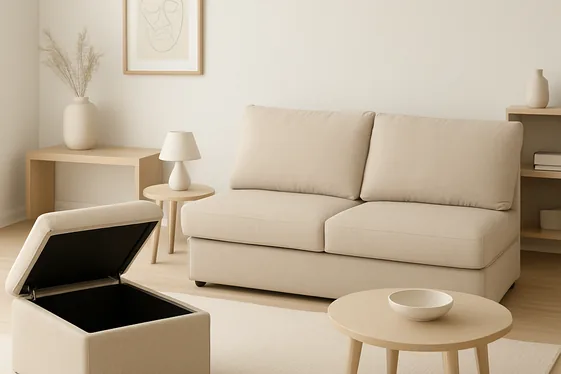
Multipurpose furniture solves two problems at once: it reduces clutter and adds versatility, especially in smaller living rooms. Pieces like storage ottomans, fold-out sofas, or nesting tables keep the floor open while providing function when needed. I’ve noticed that homeowners love how this approach keeps living rooms feeling spacious without sacrificing any mod cons or comfort.
For example, a sleek bench that doubles as a storage chest can hold blankets during the day and provide extra seating when guests arrive. Making smart choices here helps keep your space calm, organized, and flexible enough for any occasion. This keeps the idea practical, clear, and easy for readers to use right away.
It also adds a little more helpful detail without making the writing sound stiff. A simple, thoughtful explanation like this helps the whole article feel complete. That balance makes the advice feel more natural, more useful, and easier to follow.
10. Choose Art Pieces That Evoke Calmness
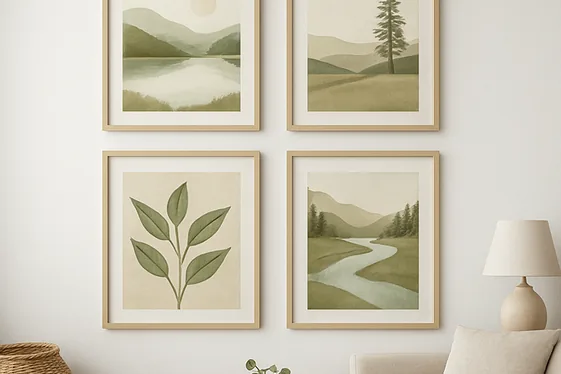
- Select artwork with soft color palettes like blues, greens, or pastels to keep the space serene.
- Avoid overly busy or aggressive abstract pieces that add visual noise.
- Opt for nature-inspired themes such as landscapes, botanicals, or water scenes.
- Use simple frames in natural wood or white to maintain minimalism.
- Limit the number of art pieces to avoid clutter and create intentional focus areas.
Art can be a silent mood-maker in your living room, influencing how you feel every time you enter the space. Choosing calm, thoughtful art elevates the aesthetic without distracting from relaxation. It turns walls into a gentle backdrop or a soft conversation starter instead of noise, making your home a better place to unwind.
This keeps the idea practical, clear, and easy for readers to use right away. It also adds a little more helpful detail without making the writing sound stiff. A simple, thoughtful explanation like this helps the whole article feel complete. That balance makes the advice feel more natural, more useful, and easier to follow.
11. Use Curtains and Rugs to Soften the Space
Quick Tip:
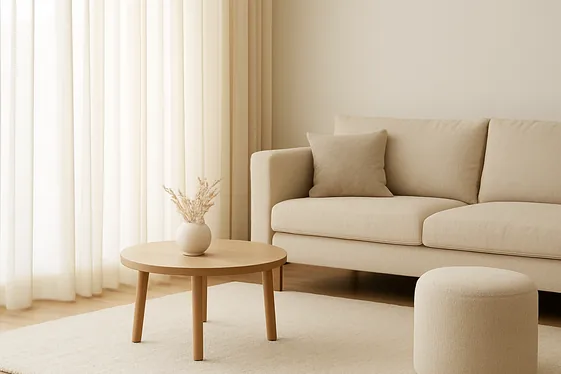
Pick lightweight curtains and low-pile rugs in subtle patterns or monochromatic tones to add warmth without cluttering visual space.
Textiles are crucial in making a minimalist living room feel cozy and inviting. Light curtains help diffuse harsh sunlight and create a soft glow throughout the room. Meanwhile, rugs ground the furniture and contribute to the calm vibe by absorbing sound and adding texture. When these textiles are thoughtfully chosen, they balance minimalism with comfort and keep the energy feeling gentle and welcoming.
This keeps the idea practical, clear, and easy for readers to use right away. It also adds a little more helpful detail without making the writing sound stiff. A simple, thoughtful explanation like this helps the whole article feel complete. That balance makes the advice feel more natural, more useful, and easier to follow.
12. Design Open Layouts That Promote Flow
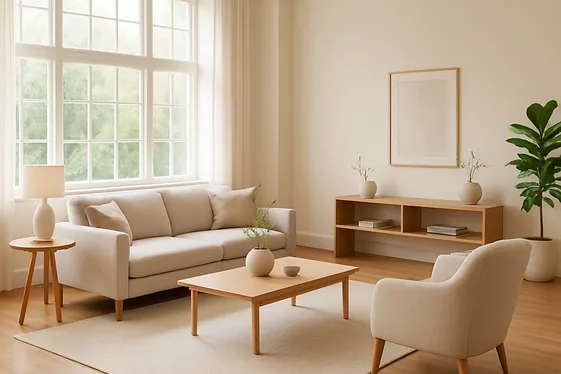
Before: Many living rooms feel cramped or disconnected due to cluttered furniture placement and cramped pathways.
After: Adopting an open layout with clearly defined zones for conversation, relaxation, and media use makes the room feel larger and more peaceful.
Prioritizing flow and open space supports calmness by preventing heavy, blocked-off areas that overwhelm the senses. In homes I’ve visited, repositioning furniture to allow free movement instantly transformed how people used their living rooms, encouraging relaxation and natural interaction. Open layouts are a foundational step to creating a calm, minimal environment. This keeps the idea practical, clear, and easy for readers to use right away.
It also adds a little more helpful detail without making the writing sound stiff. A simple, thoughtful explanation like this helps the whole article feel complete. That balance makes the advice feel more natural, more useful, and easier to follow.
13. Contest with Minimal Decorative Accents
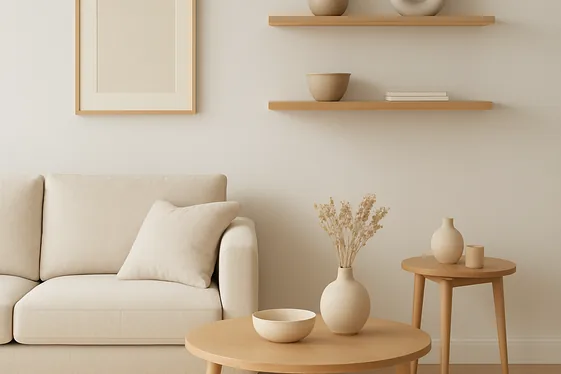
- Choose a handful of meaningful decorative pieces like a simple sculpture, a treasured book, or a minimalist vase.
- Keep surfaces mostly clear to maintain openness and avoid overwhelm.
- Limit color accents to one small area or object to avoid visual chaos.
- Regularly rotate decorations seasonally or whenever the space feels too busy.
- Opt for smooth, natural finishes that complement your overall calm color palette.
I’ve seen this work well in many cases where subtle accents act as conversation starters without crowding the room. Thoughtful minimalism means each piece serves a purpose or tells a story. This practice helps maintain a clean, restful experience while still expressing personality and warmth. This keeps the idea practical, clear, and easy for readers to use right away.
It also adds a little more helpful detail without making the writing sound stiff. A simple, thoughtful explanation like this helps the whole article feel complete. That balance makes the advice feel more natural, more useful, and easier to follow.
14. Select Low-Key Lighting to Set the Mood
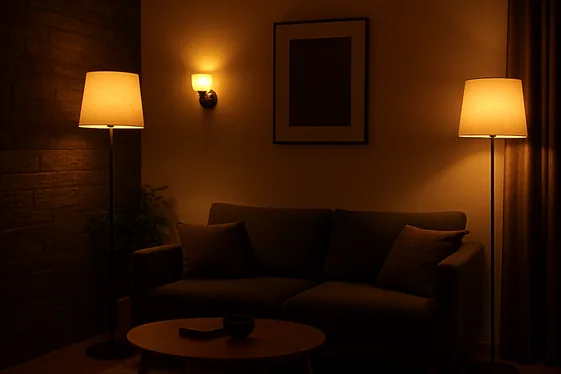
| Point | Harsh Overhead Lighting | Low-Key Lighting |
|---|---|---|
| Atmosphere | Bright, clinical | Warm, cozy |
| Energy Impact | Stimulating, tiring | Relaxing, calming |
| Flexibility | Limited options | Adjustable with dimmers |
| Style Compatibility | Often clunky fixtures | Sleek, minimalist designs |
| Eye Comfort | Can cause glare | Soft and even |
Low-key lighting shapes a living room’s energy more than most realize. Choosing fixtures that emit warm, diffused light encourages winding down rather than alertness. Dimmable lights or layered sources like floor lamps and sconces add versatility to the calm energy and fit perfectly into a minimalist aesthetic. This lighting style welcomes you home and invites relaxation every evening.
This keeps the idea practical, clear, and easy for readers to use right away. It also adds a little more helpful detail without making the writing sound stiff. A simple, thoughtful explanation like this helps the whole article feel complete. That balance makes the advice feel more natural, more useful, and easier to follow.
15. Maintain Consistency With a Cohesive Theme
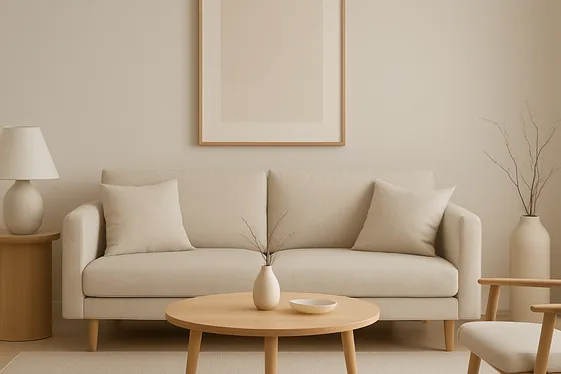
Do:
- Stick with 2-3 colors maximum for a unified look.
- Match furniture styles for harmony, such as mid-century modern or Scandinavian.
- Use repeating materials like wood or metal to tie elements together.
- Keep decorative accents minimal and related to your chosen theme.
- Plan your layout and color flow before purchasing new items.
Don’t:
- Mix too many design styles, which creates visual tension.
- Overwhelm the room with unrelated colors or textures.
- Add too many small knick-knacks that confuse the eye.
- Change trends to trends mid-design, which disrupts calm flow.
- Ignore your personal comfort preferences for style’s sake.
A cohesive theme brings peace to your minimal living room by giving it purpose and balance. Planning and restraint in design decisions make your space feel intentional and soothing. This mindset helps you curate a living room that truly feels like your personal sanctuary. This keeps the idea practical, clear, and easy for readers to use right away.
It also adds a little more helpful detail without making the writing sound stiff. A simple, thoughtful explanation like this helps the whole article feel complete. That balance makes the advice feel more natural, more useful, and easier to follow.
Conclusion
Minimal living rooms that radiate calm energy are truly achievable, especially when you focus on thoughtful choices that suit your lifestyle and space. From choosing soft color palettes to integrating natural elements and prioritizing both comfort and simplicity, each idea helps create an inviting sanctuary at home.
Smart storage, multipurpose pieces, and pared-down décor keep clutter at bay and maintain openness. Lighting, texture, and a cohesive theme tie everything together perfectly, making your living room a space where tranquility reigns. Whether you want a quiet nook to unwind or an elegant room for gatherings, these ideas offer a clear path to serene style.
Start small or dive right in—the best minimal living room is one that feels just right for you. Embrace these tips, and enjoy your calm, modern retreat.

Sarah Parker is a creative content writer with experience in crafting engaging, reader-friendly, and SEO-optimized content. She specializes in writing blog posts, website copy, social media captions, and digital marketing content across niches including lifestyle, home decor, business, and technology. Her writing style focuses on clarity, audience engagement, and search engine visibility.