
Keeping your pots and pans organized can completely transform your kitchen. Cluttered cabinets and tangled cookware aren’t just annoying—they slow you down and make cooking less enjoyable. Whether you’re working with a small apartment kitchen or a spacious home, having smart storage solutions can help you save space and keep everything within easy reach.
In this guide, we’ll explore 15 practical, stylish ideas for storing your pots and pans that suit modern living in the USA. From clever cabinet inserts to open shelving and hanging racks, each tip is designed to fit various needs and kitchen sizes.
You’ll find ideas that help you free up counter space, protect your cookware, and even show off your kitchenware as part of your decor.
No matter your budget or style, these options will help you create a smooth, satisfying cooking experience. So get ready to transform your kitchen’s clutter into a clean, easy-to-use space with storage solutions that work in 2026 and beyond.
1. Maximize Cabinet Space with Adjustable Pot Racks
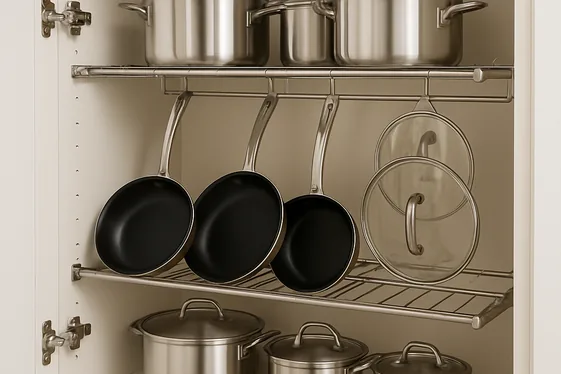
Adjustable pot racks inside cabinets are a neat way to customize your storage area. These racks can be moved up or down to fit different pot sizes, allowing taller stockpots and shallow skillets to coexist in one spot. Installing one inside a deep cabinet creates vertical layers that prevent stacking pots too high or crushing lids underneath.
A popular option is to use metal or bamboo racks that fit standard cabinet widths and depths. They snap onto the cabinet walls or slide in to maximize usable space. This setup also protects the surfaces of your pans. Without having to stack, the risk of scratches and dents drops significantly.
In my experience, this method reduces cabinet mess within weeks because every pot has a designated spot and is easier to reach. Adjustable pot racks work especially well for kitchens with medium cabinet depth, and they’re easy to install yourself with basic tools.
For homeowners wanting to tame their cooking chaos, it’s a simple upgrade delivering major organization benefits. This keeps the idea practical, clear, and easy for readers to use right away. It also adds a little more helpful detail without making the writing sound stiff.
2. Install Pull-Out Drawers for Easy Access
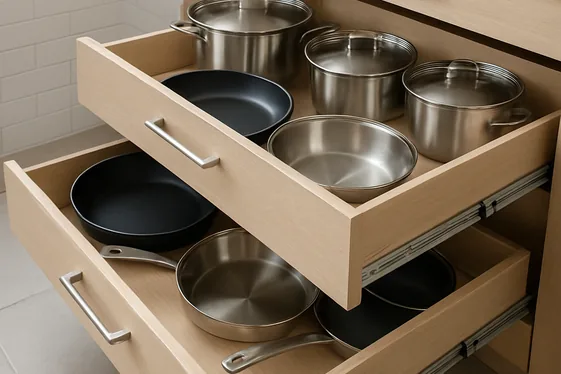
- Pull-out drawers slide out smoothly, giving full visibility to pots and pans that usually get lost in the back of cabinets.
- Installing soft-close mechanisms prevents slamming and extends the life of your cabinetry.
- Drawers with heavy-duty glides can easily hold large, heavy stockpots without sagging.
- Use adjustable dividers inside the drawers to keep pans separated and lid clutter controlled.
- Full-extension drawers let you reach everything without kneeling or bending too far.
In my experience, kitchens with pull-out drawers tend to stay tidier because it’s easier to put items away correctly. The design works well for people who prepare meals frequently and want fast, efficient access to their pots and pans. Installing these drawers may require professional help if you’re unfamiliar with cabinet modifications, but the end result is excellent space utilization and less frustration.
This method suits kitchens both small and large, making it possible to store even bulky cookware without sacrificing convenience. This keeps the idea practical, clear, and easy for readers to use right away. It also adds a little more helpful detail without making the writing sound stiff.
3. Use a Hanging Pot Rack for Stylish Display
Quick Tip:
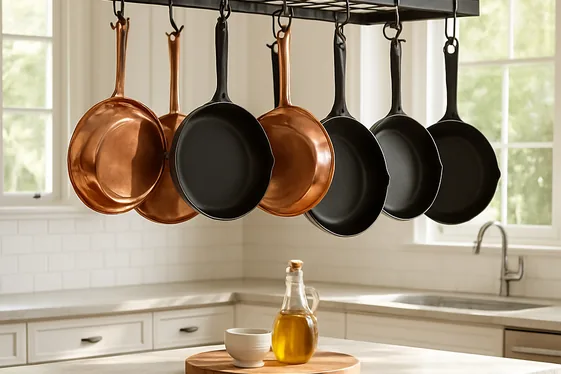
Choose a hanging pot rack with sturdy hooks and enough clearance so you won’t bump your head while working. Hanging racks look best above kitchen islands or stove areas where you use your pressure cookers and sauté pans most. Be sure to anchor the rack securely into ceiling joists to prevent accidents in busy kitchens.
Beyond saving cabinet space, hanging pot racks turn your cookware into eye-catching kitchen décor. I find that when pots and pans are visible and easy to grab, cooking becomes more inviting. Plus, those shiny copper pans or colorful cast iron pieces add personality to your space. Hanging racks are available in various styles, from rustic wood frames to sleek metal grids, so you can match your kitchen’s vibe.
While they require overhead clearance and sometimes professional installation, many homeowners report loving the combination of accessibility and style they bring. This keeps the idea practical, clear, and easy for readers to use right away. It also adds a little more helpful detail without making the writing sound stiff.
4. Organize with Stackable Cookware Separators
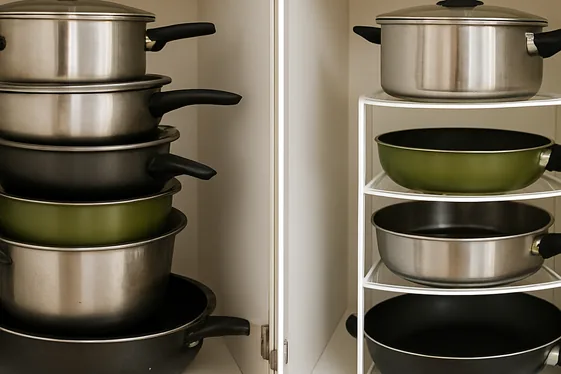
Before: Pots and pans piled on top of each other in cabinets lead to scratching, dents, and difficult access. It’s frustrating searching through a jumble when you just want one skillet.
After: Stackable separators allow you to nest pots and pans neatly while protecting their surfaces. Each pan has its own slot with a separator between, so you avoid noise and damage when retrieving or replacing them.
These separators often come in silicone, foam, or bamboo, and you can customize the stack height depending on your cookware collection. I’ve seen this work well in many cases where homeowners had to downsize their cabinets but still wanted to keep all their pots together. They fit in many drawers or cabinets and are great for organizing sets like frying pans or saucepans.
This method improves the lifespan of your pans by reducing wear and simplifies daily cooking with quick, damage-free access. This keeps the idea practical, clear, and easy for readers to use right away. It also adds a little more helpful detail without making the writing sound stiff.
5. Create a DIY Pegboard Wall for Pots and Pans
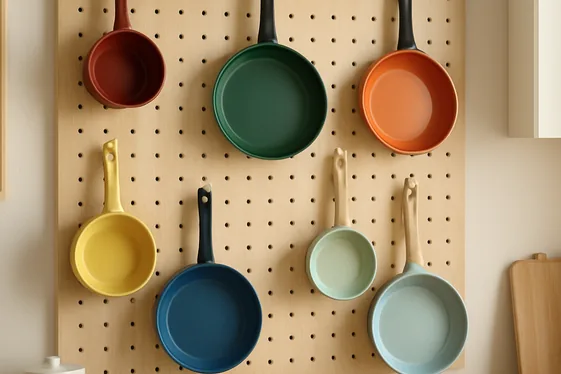
- Select a sturdy pegboard panel approximately 3 to 4 feet wide to fit an empty wall or pantry corner.
- Paint or stain the pegboard to match your kitchen for a polished look and water resistance.
- Attach strong pegboard hooks and holders capable of supporting your heaviest pots and lids.
- Arrange your cookware on the pegboard by size and frequency of use, placing frequently used pieces within easy reach.
- Secure the pegboard firmly to studs to support the weight evenly and avoid wall damage.
DIY pegboard walls turn unused vertical space into prime storage, showing off your cookware in a neat and accessible way. I like this approach because it’s affordable, customizable, and keeps everything visible at a glance. Plus, it encourages you to declutter since only your best pots and pans can fit.
This wall system works great for renters too, since it can be designed for temporary or permanent installation depending on your needs. This keeps the idea practical, clear, and easy for readers to use right away. It also adds a little more helpful detail without making the writing sound stiff.
6. Magnetic Strips vs. Traditional Hooks: Which Is Better?
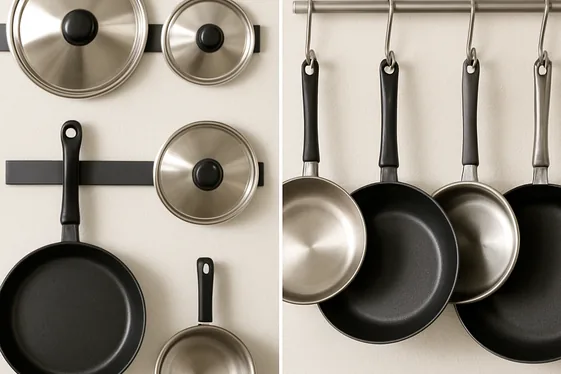
| Feature | Magnetic Strips | Traditional Hooks |
|---|---|---|
| Installation | Simple, mounted on walls or cabinet sides | Requires wall anchors or ceiling hooks |
| Space Efficiency | Holds flat pans and metal lids compactly | Better for hanging bulky pots and pans |
| Accessibility | Quick grab-and-go for smaller pans | Great for heavy or odd-shaped cookware |
| Style Appeal | Sleek, modern look | Rustic or industrial depending on style |
| Weight Limit | Limited to lighter cookware | Can hold heavier cast iron or stockpots |
| Maintenance | Easy to wipe clean | Requires occasional tightening of hooks |
That’s why many experts recommend mixing these two for maximum efficiency: magnetic strips for lighter skillets or lids, and hooks for heavier or larger pots. I’ve noticed kitchens that adopt both tend to utilize wall space best without overcrowding. Both methods keep cookware off counters and out of cabinets, boosting usable workspace instantly.
This keeps the idea practical, clear, and easy for readers to use right away. It also adds a little more helpful detail without making the writing sound stiff.
7. Do’s and Don’ts of Storing Nonstick Cookware
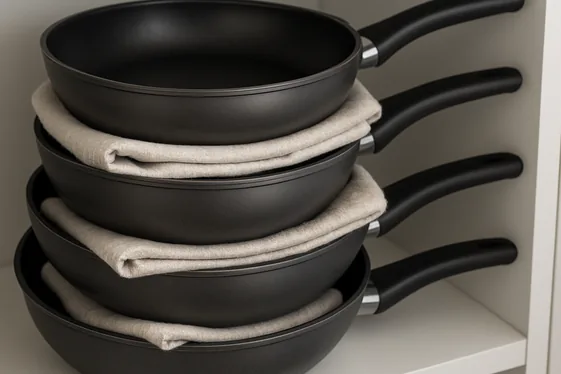
Do:
- Use soft cloth liners or separators to prevent scratching of nonstick surfaces.
- Store pans stacked with care, placing paper towels between each.
- Hang lighter nonstick pans on sturdy hooks to avoid warping.
- Clean and dry thoroughly before storing to avoid residue buildup.
Don’t:
- Avoid nesting pans without protection to prevent coating damage.
- Don’t use metal holders or racks that cause scratches.
- Never store cookware while still damp to prevent rust on rims.
- Don’t place heavy pots on top of nonstick pans to avoid bending.
Proper storage extends the life of your nonstick cookware significantly. Keeping the coating intact helps maintain even cooking and easy food release. Avoiding harsh contact is key, so be gentle when organizing this type of kitchenware. Follow these do’s and don’ts and you’ll enjoy your favorite pans for years.
This keeps the idea practical, clear, and easy for readers to use right away. It also adds a little more helpful detail without making the writing sound stiff.
8. Quick Facts on Using Over-the-Sink Dish Racks for Pots
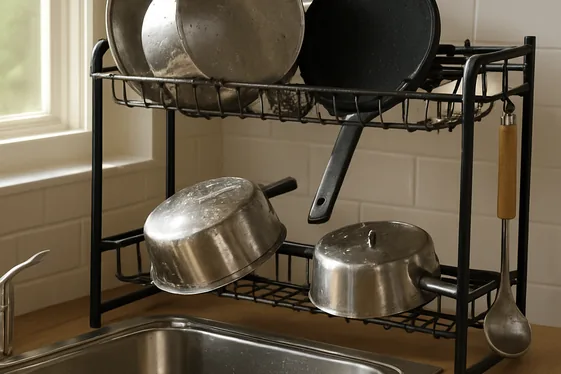
Cost: Moderate to High
Time: Easy setup, under 30 minutes
Skill Level: Beginner
Best For: Small kitchens with limited counter space
Result: Efficient drainage and drying with minimal mess
Over-the-sink dish racks aren’t just for dishes—they’re perfect for storing pots and pans after cooking or washing. By placing your cookware here, water drains directly into the sink, preventing water buildup and surface damage. I find that this setup helps me keep countertops clear while pots dry quickly. These racks come in foldable or adjustable models and can even hold lids, maximizing drying space.
If your kitchen lacks enough cabinet room, this practical choice doubles as a drying station and storage solution in one. This keeps the idea practical, clear, and easy for readers to use right away. It also adds a little more helpful detail without making the writing sound stiff.
9. Utilize Vertical Space with Tall Cabinet Storage
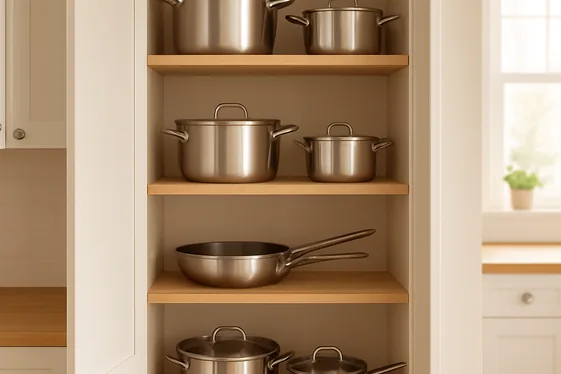
Taller cabinets offer natural vertical storage that many homeowners overlook. Installing multi-tiered shelves inside tall cabinets lets you stack pots, pans, and lids efficiently. This creates distinct zones for different cookware sizes and types, making everything more accessible without overcrowding. I’ve noticed that tall cabinets with adjustable shelving are a game-changer, especially for large families or anyone with lots of cookware.
You can reserve the top shelves for items used less frequently and keep daily essentials in the middle for easy reach. This vertical storage method also reduces clutter on counters since bigger pots and stockpots are tucked away neatly.
For kitchens with ample ceiling height, maximizing vertical space is an effective and elegant solution. This keeps the idea practical, clear, and easy for readers to use right away. It also adds a little more helpful detail without making the writing sound stiff.
10. Group Similar Pots and Pans in Deep Drawers
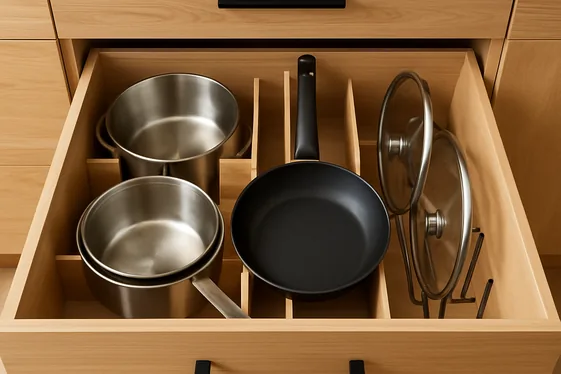
- Arrange pots and pans by size and type for streamlined storage that cuts down search time.
- Use adjustable dividers or inserts to keep pan stacks stable and prevent sliding.
- Store lids vertically along one side with a lid organizer or separate rack.
- Deep drawers accommodate large cookware, letting you pull everything out and see it all.
- Label front or inside drawers to quickly identify contents, improving kitchen organization.
Deep drawers are fantastic for grouping similar cookware so you don’t dig through mixed piles. In my experience, houses with deep drawer systems become less cluttered faster because people find what they need easily and put items away correctly. This technique works particularly well in kitchens with limited cabinet space but room for drawers under counters or islands.
This keeps the idea practical, clear, and easy for readers to use right away. It also adds a little more helpful detail without making the writing sound stiff.
11. Quick Tip for Caring for Cast Iron When Stored
Quick Tip:
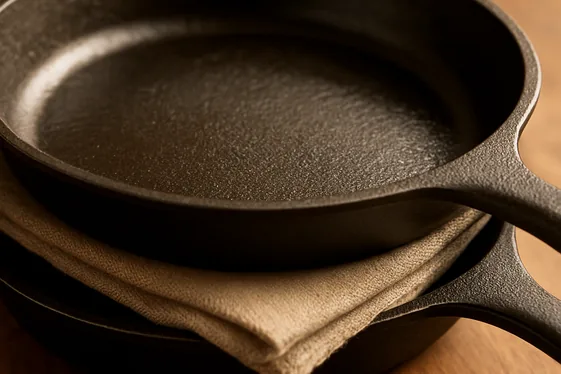
Always dry cast iron thoroughly before storing, then lightly oil the surface to prevent rust. Avoid stacking cast iron pans directly; use a paper towel or cloth between them. Store cast iron in a well-ventilated area to keep moisture away and preserve seasoning.
Cast iron requires special care, and proper storage is just as important as cleaning. I find that cast iron pans last much longer and cook better when cared for in this way. Even a simple layer of oil can protect the surface during long storage times. This method keeps your pans ready for use, saving time and avoiding frustration when you want to cook your favorite meals.
This keeps the idea practical, clear, and easy for readers to use right away. It also adds a little more helpful detail without making the writing sound stiff.
12. Before and After: From Cluttered to Clear in Pantry Storage
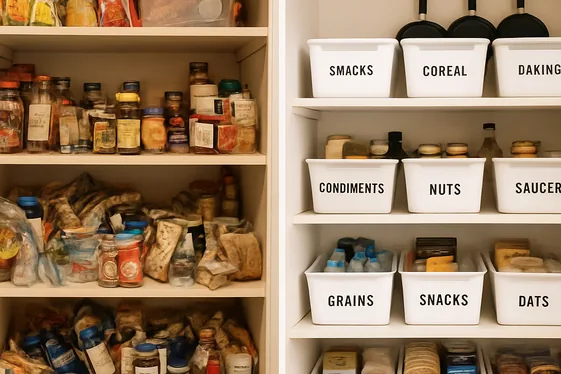
Before: The pantry was filled with a mix of utensils, pots, and pans all tossed wherever there was space, creating a chaotic mess. Finding any one item was a challenge, and the lack of organization often led to damage or misplaced lids.
After: Installing specialized pot racks and labeled bins inside the pantry transformed the space into an organized powerhouse. Each pot and lid had a designated spot, grouped by type and size, making retrieval quick and painless. The clear order also made regular cleaning easier.
Pantry storage can be a secret weapon for housing your pots and pans if you dedicate a section and organize it thoughtfully. I’ve seen how classified bins, adjustable racks, and consistent labeling make even a small pantry a convenient station for cookware storage that stays neat long-term.
This keeps the idea practical, clear, and easy for readers to use right away. It also adds a little more helpful detail without making the writing sound stiff.
13. Numbered Steps to Install Under-Cabinet Pot Lid Holders
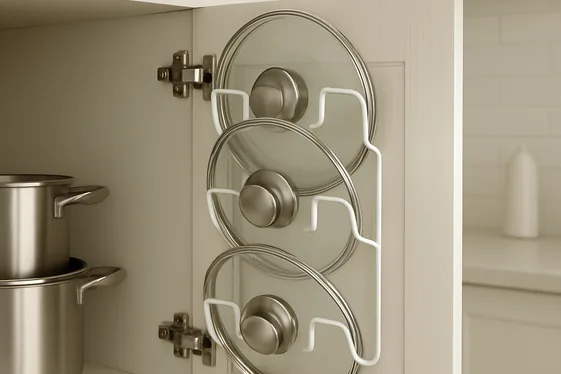
- Measure the interior width of your cabinet door to purchase an appropriately sized pot lid holder.
- Choose a design that can hold multiple lids vertically or horizontally, depending on your cabinet layout.
- Mark drill holes on the inside of your cabinet door at the desired height for easy access.
- Attach the holder securely with screws or heavy-duty adhesive designed for cabinetry.
- Test the sturdiness before placing lids inside, ensuring they slide in and out without resistance.
Under-cabinet lid holders free up shelf or drawer space by using often overlooked door space inside cabinets. That’s why many experts recommend this for kitchens where lid clutter becomes hard to manage. It’s an inexpensive way to stay neat and grab lids quickly without hassle.
This keeps the idea practical, clear, and easy for readers to use right away. It also adds a little more helpful detail without making the writing sound stiff.
14. Comparison of Lazy Susan vs. Pull-Out Corner Cabinets
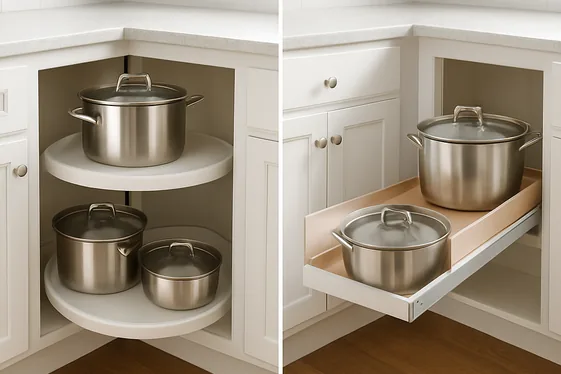
| Feature | Lazy Susan | Pull-Out Corner Cabinets |
|---|---|---|
| Accessibility | Rotates to bring items to front | Slides out fully for complete access |
| Storage Capacity | Moderate, circular storage space | Larger, rectangular and better use of corners |
| Installation Difficulty | Easier to retrofit | Requires more cabinet modification |
| Cost | Moderate | Higher due to complexity |
| Best For | Small to medium cookware | Heavy pots and large pans |
| Cleaning | Requires removal for deep cleaning | Easier to wipe down with full access |
Pull-out corner cabinets maximize hard-to-use corner spots with easy access, while Lazy Susans spin pots to reach them without crouching. I’ve noticed kitchens that combine both depending on cabinet location tend to optimize space best. Choosing either depends on your storage needs and budget.
This keeps the idea practical, clear, and easy for readers to use right away. It also adds a little more helpful detail without making the writing sound stiff.
15. Do and Don’t List for Cleaning and Storing Stainless Steel Pots
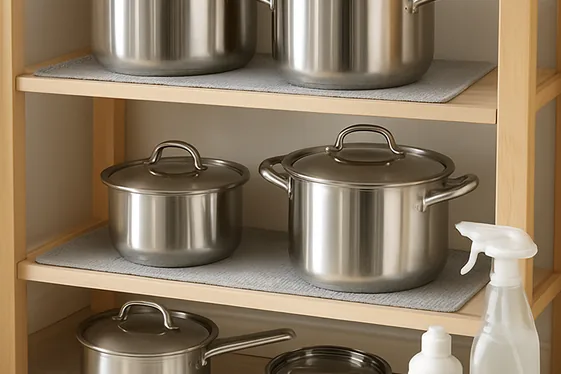
Do:
- Clean stainless steel pots with gentle scrubbers and avoid harsh abrasives.
- Dry immediately to prevent water spots and streaks.
- Store pots with lids off or ajar to allow airflow and prevent odors.
- Use shelf liners or separators to stop pots from scratching each other.
- Regularly polish pots to maintain their shine and prevent discoloration.
Don’t:
- Don’t store pots while still wet to avoid rust and stains.
- Avoid stacking heavy pots on lighter ones to prevent warping.
- Don’t use steel wool or metal brushes that can damage the finish.
- Avoid overcrowding cabinets, which increases the risk of dents and scratches.
- Don’t ignore small dents or marks early, as they can worsen with use.
Proper cleaning and careful storage prevent stainless steel pots from losing their vibrant look and functionality. This helps you keep your cookware in top shape for years of cooking success. This keeps the idea practical, clear, and easy for readers to use right away. It also adds a little more helpful detail without making the writing sound stiff.
Conclusion
Keeping your pots and pans organized doesn’t have to be a chore. Whether you prefer adjustable racks inside cabinets, pull-out drawers, or even hanging displays, there are plenty of ways to fit your kitchen style and storage needs. Nonstick and cast iron cookware need special care and clever storage to protect their surfaces, while using vertical space and pantry solutions can open up room in tight kitchens.
Through this guide’s practical tips, you can turn clutter into clear, accessible spaces that make cooking smoother and more enjoyable. The best approach depends on your kitchen layout, cookware collection, and how much effort you want to put into installation or maintenance.
Take your time exploring these ideas, and you’ll find the perfect balance of function and style. A well-organized set of pots and pans truly transforms your daily cooking experience into something fun and efficient!

Sarah Parker is a creative content writer with experience in crafting engaging, reader-friendly, and SEO-optimized content. She specializes in writing blog posts, website copy, social media captions, and digital marketing content across niches including lifestyle, home decor, business, and technology. Her writing style focuses on clarity, audience engagement, and search engine visibility.