Blue is a timeless color known for its calming and versatile qualities, making it a fantastic choice for living room accent walls. Whether your style leans modern, cozy, or eclectic, introducing a blue accent can transform your space into a stylish haven.
This guide will explore 13 inspiring blue accent wall ideas specifically curated for living rooms across the USA, helping you find the perfect shade and style to match your home’s vibe. From bold navy hues to soft sky blues, we’ll cover a range of looks that work beautifully with various decor themes and furniture choices.
Many homeowners underestimate how much an accent wall can redefine a room’s personality. By focusing on just one wall, you can add depth, texture, and a pop of color without overwhelming the space.
Throughout this article, you’ll discover creative ways to bring blue to your walls, including painting techniques, patterns, and complementary decor tips.
1. Deep Navy for a Bold Statement
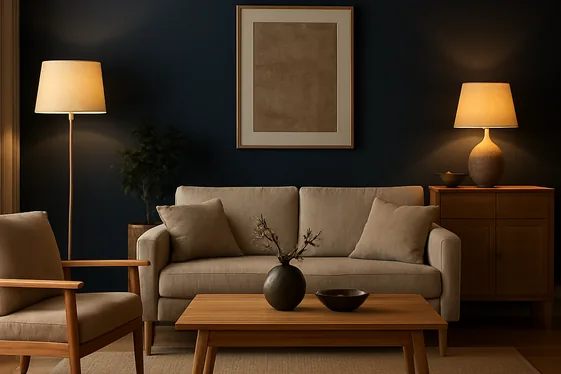
Deep navy instantly commands attention and brings a powerful presence to your living room. Paint a single wall in this rich, dark blue to create a dramatic focal point that contrasts beautifully with light furnishings and natural wood tones. Because it absorbs light, deep navy works best on a wall with plenty of natural sunlight or balanced with warm, layered lighting like table lamps and pendant lights.
Consider pairing it with white or cream accents—think throw pillows, curtains, or even a plush area rug—to keep the space from feeling too moody. Don’t hesitate to experiment with textures alongside your navy accent wall. A velvet sofa or a woven wall hanging adds depth and interest, enhancing the boldness without overwhelming the room.
If your space feels small, limit navy to a single wall rather than surrounding the room. Balance is key; complement the bold backdrop with metallics like brass or copper in your fixtures and décor for a modern, chic finish. Deep navy best suits homeowners looking to make a confident design choice that will stand out in their living area.
2. Soft Powder Blue for a Calm Atmosphere
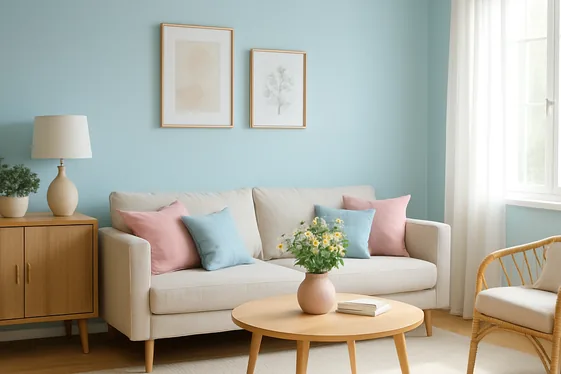
- Soft powder blue creates a tranquil backdrop that instantly soothes the eyes, making your living room feel more relaxed and inviting.
- Pairing this hue with natural wood tones or creamy whites brightens the space without overwhelming it, maintaining harmony throughout.
- Matte or eggshell finishes help enhance powder blue’s understated charm by softening reflections, which adds to the calm vibe.
- Incorporate plush textiles like velvet cushions or a shag rug in neutral shades to complement the wall and deepen the cozy effect.
- Keep artwork minimal or choose pieces with simple lines and muted colors to avoid competing with the wall’s peaceful tone.
- Lighting matters a lot—soft, warm LEDs or well-placed lamps emphasize powder blue’s comforting quality, preventing the room from feeling cold.
- To balance the serenity, introduce fresh greenery like ferns or succulents; their organic shapes add life without disrupting the calm mood.
Powder blue walls have a way of making daily routines feel a little more peaceful. In my experience, living rooms painted in this soft shade naturally encourage slower, more mindful moments spent with family or a good book.
It doesn’t demand attention but creates a gentle presence that works especially well in spaces where unwinding is key. Just be sure to layer textures and lighting thoughtfully so the softness doesn’t slip into dullness.
3. Blue Ombre Walls to Add Gradient Elegance
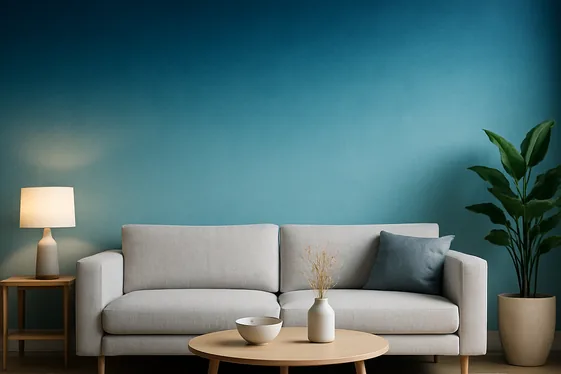
Quick Tip:
Create a striking feature wall by blending various shades of blue from deep navy to soft sky. Use vertical or horizontal strokes to gradually change the color, starting darker at the bottom and fading lighter as you move up. Keep your brush or roller strokes smooth to ensure the gradient blends seamlessly. Seal the wall with a clear matte varnish to protect the finish and add subtle sheen.
Blue ombre walls bring a subtle yet dynamic flair to living rooms by introducing a gradient effect that draws the eye naturally across the space. Start by selecting three to four shades of blue, from bold, saturated hues at the bottom to pale pastels near the ceiling. This creates a sense of depth and height that lifts the room’s vibe.
Pair the wall with simple, neutral furniture to let the ombre detail shine without overwhelming the décor. It’s a stylish way to merge color and texture for a living room that feels fresh, airy, and inviting.
4. Classic Striped Blue Accent Wall
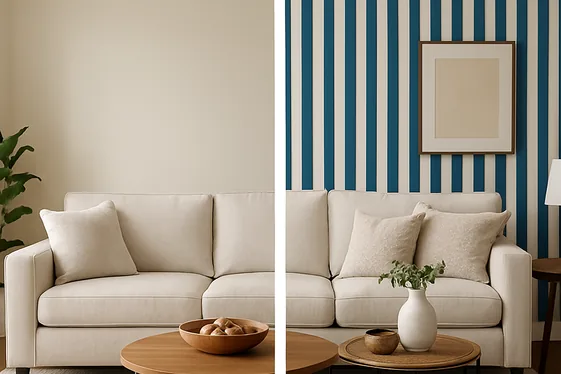
Before: The living room walls felt flat and a bit dull, with a single coat of plain blue paint that didn’t quite bring any character to the space. Without any visual breaks, the room seemed smaller and less dynamic, leaving the décor to do all the heavy lifting. The plain wall struggled to complement the furniture and design elements around it.
After: Introducing classic striped blue accent walls brought instant personality and depth to the room. Alternating wide and narrow stripes in varying shades of blue created movement and made the walls pop without overwhelming the space. This subtle pattern lifted the ceiling visually and added a crisp, modern touch that seamlessly ties the room’s style together.
Stripes work especially well when you choose two or three shades of blue that play off each other. For a fresh look, start by measuring your wall and marking stripes that are about 6 to 12 inches wide. Use painter’s tape for clean lines and create an appealing contrast by pairing navy with a soft sky or powder blue.
This design suits both large open spaces and cozier rooms looking for a little edge, making your living room feel effortlessly stylish and inviting. Quick Tip: Stick to horizontal stripes if you want to visually widen the space, or vertical ones for added height.
5. Geometric Blue Patterns for Modern Flair
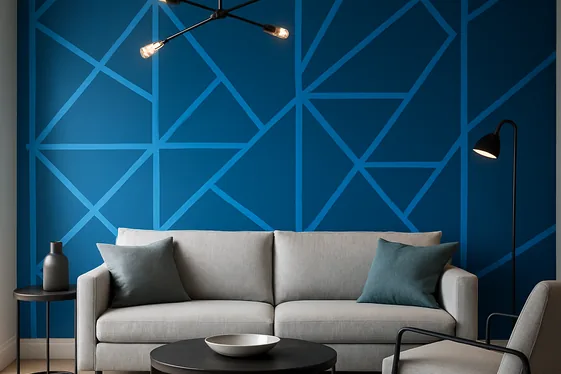
- Choose a bold shade of blue as your base color for the accent wall, such as navy or cobalt, to create a striking backdrop for your geometric design.
- Use painter’s tape to outline geometric shapes like triangles, diamonds, or hexagons on the wall. Plan the pattern with a pencil and a level to keep lines straight and shapes even.
- Select two or three complementary blue tones or add a neutral like white or gray to fill the shapes. Paint each section carefully, allowing the base color to dry first before filling in the shapes.
- Remove the tape once the paint is dry to reveal crisp, clean lines. Touch up edges with a small artist’s brush if necessary.
- Style the room with modern furniture and metallic accents to enhance the contemporary feel the geometric pattern brings to the space.
Geometric blue patterns inject personality and movement into a living room without overwhelming it. I’ve noticed that homeowners often find the wall doubles as an art piece, making the entire room feel curated and fresh.
The repeated shapes guide the eye and add depth—a beautiful way to keep the space dynamic yet balanced. Keep the rest of your decor simple to let the wall stay the star of the room.
6. Textured Blue Panels vs. Smooth Blue Paint
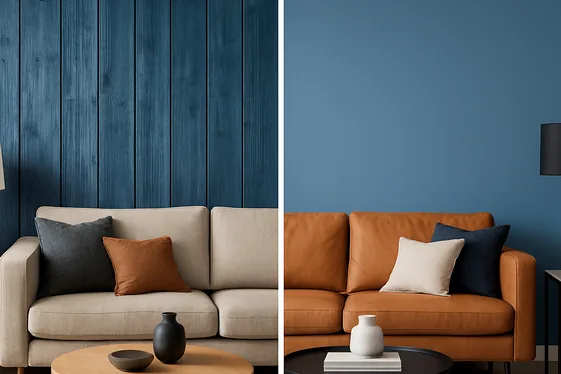
| Point | Textured Blue Panels | Smooth Blue Paint |
|---|---|---|
| Visual Interest | Adds depth and tactile appeal | Clean and simple finish |
| Installation | Requires measuring, cutting, and mounting | Quick and easy with rollers or sprayers |
| Maintenance | Needs gentle cleaning, less prone to showing imperfections | Easier to clean but scratches can show |
| Cost | Typically higher due to materials | More budget-friendly |
| Style Impact | Creates a bold architectural feature | Provides a subtle, versatile backdrop |
| Customization | Limited to panel designs and textures | Wide range of paint shades and finishes |
| Room Size Effect | Can make a room feel cozier or smaller | Can open up a space with lighter hues |
Textured blue panels bring a sculptural feel into your living room, giving walls a lively presence that you can actually touch. They work best when you want that wow factor or to hide wall imperfections. Smooth blue paint, on the other hand, lets you change shades easily and suit any aesthetic from modern to classic.
It’s fast to apply and less expensive, ideal if you’re looking for a swift refresh. Thinking about your room’s size and how much effort you want to spend will help decide which route fits your vibe best.
7. Do’s and Don’ts of Blue Accent Walls
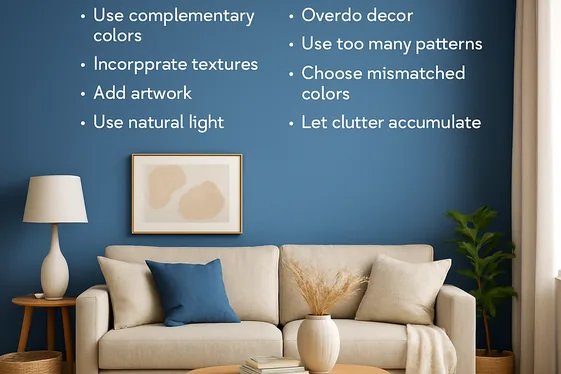
Do:
- Choose a shade of blue that complements your existing decor and lighting, whether it’s a soft sky blue or a deep navy.
- Paint only one wall, ideally the one that naturally draws attention or anchors the room, like behind the sofa or fireplace.
- Use painter’s tape to create clean, sharp edges for a professional finish.
- Coordinate accent pieces, such as cushions or rugs, to reinforce the blue theme without overwhelming the space.
- Test paint samples on the wall at different times of day to see how natural and artificial light affect the color.
Don’t:
- Don’t paint all the walls blue—this can make the living room feel too dark or cramped.
- Avoid busy patterns or overly bright blues that clash with other colors in the room.
- Don’t neglect prepping your wall; skipping priming or patching can cause uneven color and texture.
- Refrain from choosing blue tones that don’t blend with the room’s style, like a bold cobalt in a minimalist space.
- Avoid heavy furniture blocking the accent wall, as it hides the focal point and diminishes impact.
Blue accent walls work best when treated as the room’s visual anchor, bringing personality without dominance. By balancing color choice, placement, and decor, you’ll create a stylish atmosphere that feels inviting and fresh. Remember, the right blue can energize or calm the room—but rushing or mismatching can make it feel off. Take your time, layer carefully, and enjoy the transformation.
8. Quick Facts About Blue Shades in Living Rooms
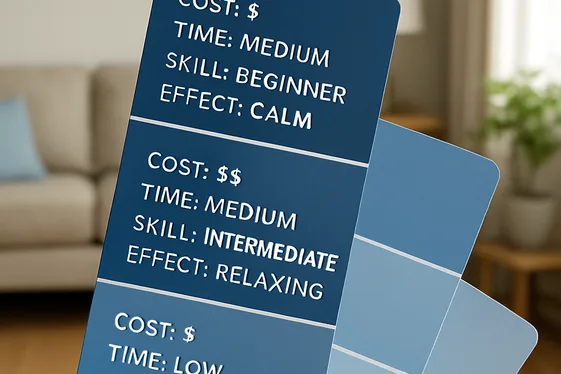
Cost: Moderate
Time: A weekend
Skill Level: Intermediate
Best For: Adding depth and calm
Blue shades in living rooms bring a refreshing mix of peace and personality. Most people pick navy or soft blues because they offer a balance between boldness and serenity. In my experience, darker blues can make a room feel cozier without closing it in, especially when paired with light-colored furniture and natural light sources.
Lighter blues tend to brighten the space, creating an airy and welcoming vibe that works well for smaller living rooms. The key to a successful blue accent wall is picking the right hue for your room’s lighting and size. Blue often enhances the feeling of space, and it works wonderfully alongside wood tones or white trims.
To avoid a cold atmosphere, try layering your blue wall with warm textures like a woven rug or plush cushions. That’s why many experts recommend testing paint samples on a large poster board and observing them at different times of day before committing.
9. Navy Blue with Metallic Accents
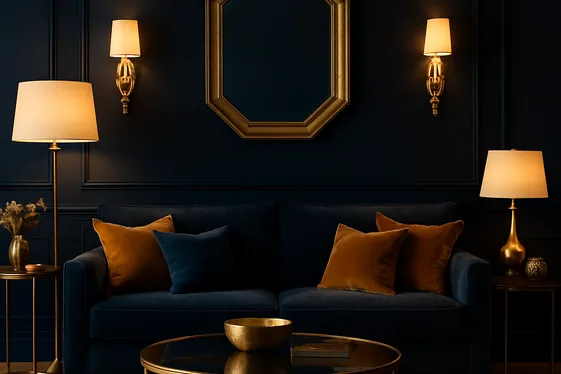
Navy blue walls create a rich, calming backdrop that feels both timeless and bold. When paired with metallic accents—think brass light fixtures, gold picture frames, or silver side tables—the combination adds a layer of sophistication and sparkle. The deep blue acts like a velvet canvas, allowing metallic elements to catch the eye without overwhelming the room. Consider a single navy accent wall behind your sofa, then hang a statement mirror with a gold frame.
A sleek metallic floor lamp nearby will tie the look together while adding functional lighting. To balance the darker tone, incorporate lighter furnishings like cream or soft gray sofas and cushions. Metallic accents work best when they pop against the blue without competing with each other, so limit yourself to two or three types of finishes.
Avoid overdoing it with too many shiny elements or the space may start to feel cluttered. Instead, keep it curated—a brushed copper vase or a polished chrome coffee table will achieve the right amount of glam and keep your living room feeling modern and inviting.
10. Coastal Blue Walls with Natural Wood Elements
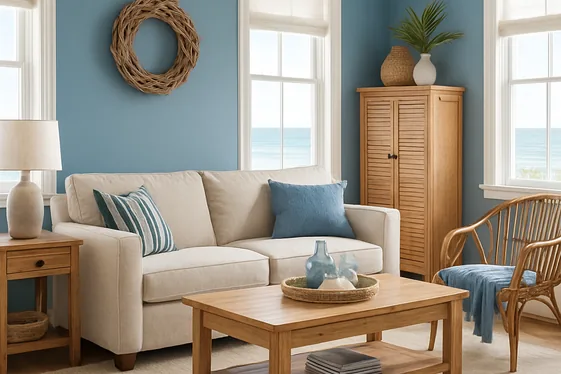
- Choose a deep navy or soft coastal blue for your accent wall to bring the essence of the ocean indoors. These shades create a calming backdrop that anchors the room without overpowering it.
- Incorporate natural wood elements like ceiling beams, wooden side tables, or a reclaimed wood media console to add texture and warmth. The wood’s organic feel contrasts beautifully with the smooth blue wall.
- Opt for light to medium wood tones such as oak, maple, or ash to keep the look fresh and beachy rather than dark and heavy. This lightness enhances the airy coastal vibe.
- Install floating wooden shelves on the blue wall to display beach-inspired decor like shells, driftwood, or nautical finds. This adds both function and a personal touch to the space.
- Layer in soft fabrics and textures that reflect coastal living—think linen pillows, jute rugs, or cotton throws in whites and sandy neutrals to complement the wood and blue.
- Use brass or matte black fixtures for lighting and hardware to introduce a modern edge without clashing with the natural materials.
- Position your seating close to the accent wall to make it a focal point that invites relaxation and easy conversation.
Combining a coastal blue wall with natural wood elements transforms your living room into a serene retreat reminiscent of a beach house. The blue color sets a cool and tranquil mood, while the wood brings in texture and organic warmth. This mix works well with plenty of natural light and neutral, airy decor to balance richness and brightness.
11. Using Blue Chalkboard Paint for a Functional Wall
Quick Tip:
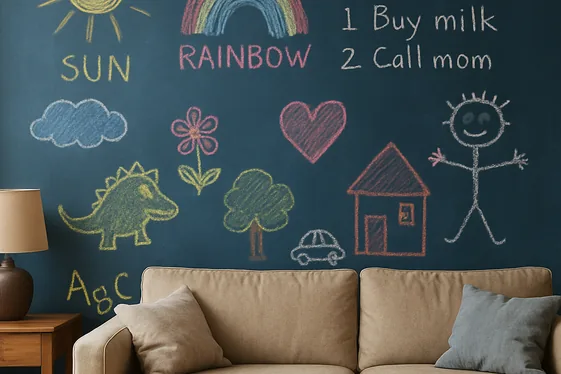
Consider blue chalkboard paint for a lively and interactive accent wall. It’s perfect for jotting down reminders, doodling, or leaving messages for family members. Apply two to three smooth coats on a well-prepped, smooth wall surface. Keep chalk and a small eraser handy nearby. This setup turns a stylish wall into a central spot for creativity and communication.
Painting a living room wall with blue chalkboard paint is more than just a style move—it adds genuine function to your space. In my experience, family members often gather around these walls to leave notes or sketch ideas, making the living area feel welcoming and alive. The deep blue shade works well to hide smudges while still showcasing chalk art vividly.
Just make sure the wall is flat and cleaned before painting, so your chalk markings glide on smoothly. This idea suits households that appreciate a playful, practical twist to their décor and want to keep everyone connected throughout busy days.
12. Before and After: Blue Accent Wall Makeover
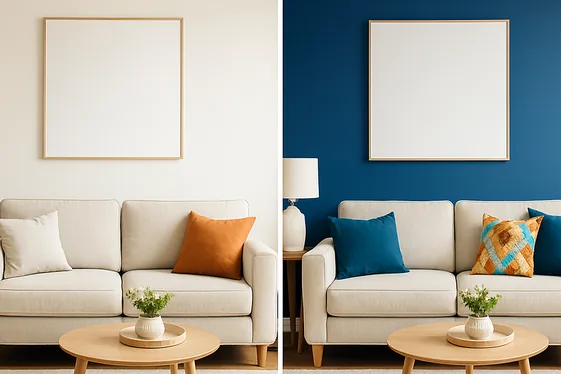
Before: The living room walls were all painted in plain beige, making the space feel dull and uninspiring. Without any focal point, the room lacked character and the furniture appeared to blend into the background. The overall vibe was forgettable, and guests often commented that it felt like a missed opportunity for style.
After: A rich navy blue accent wall was painted behind the sofa, instantly injecting personality and depth into the room. The blue created a stunning contrast with the light-colored furniture and natural wood flooring. Suddenly, the space felt cozier and more inviting, with the wall drawing attention to the carefully chosen art and décor pieces displayed on floating shelves.
Transforming one wall into a bold blue accent can have a dramatic effect on your living room’s atmosphere. Navy or royal blue shades provide a sophisticated backdrop that enhances both modern and traditional furniture sets. When painting, prep the wall by cleaning and lightly sanding it for a smooth finish.
Consider pairing the blue with crisp white trim or gold-toned accents to elevate the look. The payoff? A captivating room that feels deliberate and stylish without overwhelming your entire space.
13. Step-by-Step Guide to Painting a Blue Accent Wall
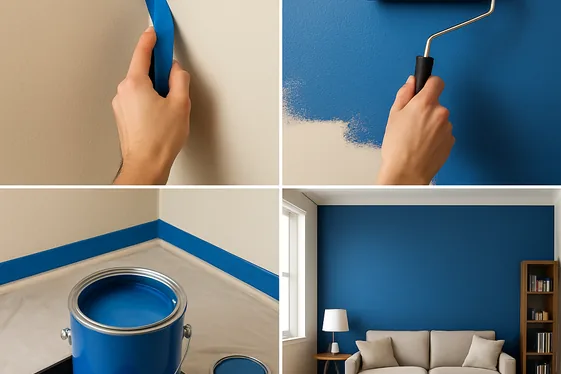
- Clear the wall of any furniture or decorations and wash it with a mild detergent to remove dust and grime. Dry thoroughly before starting.
- Use painter’s tape to outline the edges of the wall, including baseboards, ceilings, and adjacent walls, to keep paint lines clean and sharp.
- Apply a coat of primer suitable for interior walls, especially if covering a light color or stains. Let the primer dry completely, usually about two hours.
- Stir your blue paint well and pour it into a paint tray. Use a high-quality angled brush to cut in along the taped edges, then switch to a roller for larger areas. Apply paint evenly.
- Allow the first coat to dry, typically 4 hours, and apply a second coat for full, rich color. Once dry, carefully remove tape to reveal crisp lines.
Painting a blue accent wall isn’t just about slapping on color; it’s about prep and technique. Skipping primer can cause patchy spots or peeling later, and rushing the drying times leads to streaks. Keep your roller strokes consistent and don’t overload it with paint to prevent drips.
When done right, that deep blue wall becomes the stylish focal point your living room deserves, setting a calming, modern mood instantly.
Conclusion
Choosing the perfect blue accent wall for your living room can completely change your home’s energy and aesthetic. From the rich drama of deep navy to the tranquil vibes of powder blue, there’s a shade and style to suit every taste and space size. Whether you love bold geometric patterns or prefer subtle textured panels, understanding the pros, cons, and steps to execution helps you feel confident in your choice.
Coastal blues blend naturally with wooden elements for a fresh feel, while metallic accents elevate darker blues for a luxe touch. Remember, preparation and lighting play crucial roles in the final look. Take your time testing colors and styles before committing, and don’t shy away from adding personal details that make the space feel truly yours.
With these 13 ideas, your living room can become a stylish and inviting spot that reflects your personality and meets your daily needs perfectly. Dive in and discover the blue that speaks to you!

Sarah Parker is a creative content writer with experience in crafting engaging, reader-friendly, and SEO-optimized content. She specializes in writing blog posts, website copy, social media captions, and digital marketing content across niches including lifestyle, home decor, business, and technology. Her writing style focuses on clarity, audience engagement, and search engine visibility.